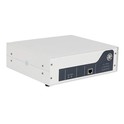
Hey there! As a supplier of 4000w ultrasonic generators, I often get asked if our 4000w ultrasonic generator can be used for textile processing. Well, let's dive right into it and find out.
First off, what exactly is an ultrasonic generator? An ultrasonic generator is a device that produces high - frequency electrical signals. These signals are then converted into mechanical vibrations by a transducer. In the case of our 4000w ultrasonic generator, it can generate a significant amount of power, which makes it a strong candidate for various industrial applications.


The Basics of Textile Processing
Textile processing involves a series of steps, including cleaning, dyeing, printing, and finishing. Each of these steps aims to enhance the quality, appearance, and functionality of the textiles. For example, cleaning is crucial to remove impurities and dirt from the raw materials, while dyeing gives the fabric its desired color.
How Ultrasonic Technology Helps in Textile Processing
Ultrasonic technology has some unique advantages in textile processing. The high - frequency vibrations can create cavitation bubbles in a liquid medium. When these bubbles collapse, they generate intense local pressure and temperature changes. This phenomenon can be used in several ways in textile processing.
Cleaning
In the cleaning process, the cavitation effect can dislodge dirt and impurities from the textile fibers. The 4000w ultrasonic generator can produce a large number of cavitation bubbles, which means more effective cleaning. It can clean textiles faster and more thoroughly compared to traditional methods. For example, in a large - scale textile factory, using our 4000W Ultrasonic Generator can significantly reduce the cleaning time and improve the overall quality of the cleaned textiles.
Dyeing
When it comes to dyeing, ultrasonic waves can improve the diffusion of dyes into the textile fibers. The vibrations help the dye molecules penetrate deeper and more evenly into the fabric. With a 4000w ultrasonic generator, the dyeing process can be accelerated, and the color fastness of the dyed textiles can be enhanced. This means that the textiles will keep their color for a longer time, which is a big plus for both manufacturers and consumers.
Printing
In textile printing, ultrasonic technology can also play an important role. It can improve the adhesion of the printing paste to the fabric. The 4000w power ensures that the ultrasonic waves can effectively act on the printing paste and the textile surface, resulting in clearer and more durable prints.
Advantages of Using a 4000w Ultrasonic Generator in Textile Processing
High - power Performance
The 4000w power output of our ultrasonic generator allows for large - scale textile processing. It can handle a large volume of textiles at once, which is very beneficial for industrial - scale production. For example, a big textile mill can process more fabrics in a shorter time, increasing their productivity.
Energy Efficiency
Although it has a high power output, our 4000w ultrasonic generator is designed to be energy - efficient. It can achieve the same or even better results than traditional processing methods while consuming less energy. This not only saves costs for the textile manufacturers but also contributes to environmental protection.
Precision and Consistency
The ultrasonic waves generated by our 4000w generator are very precise. They can ensure consistent results across different batches of textiles. Whether it's cleaning, dyeing, or printing, the quality of the processed textiles will be more uniform, which is essential for maintaining a good brand reputation in the market.
Comparison with Other Power - rated Ultrasonic Generators
We also offer 3000W Ultrasonic Generator and 500W Ultrasonic Generator. The 500w generator is more suitable for small - scale or experimental textile processing. It's great for research institutions or small workshops that want to test the ultrasonic technology on a small number of samples.
The 3000w generator is a good middle - ground option. It can handle medium - sized textile processing tasks. However, if you have a large - scale textile production line, the 4000w ultrasonic generator is the way to go. It provides the extra power needed to process a large quantity of textiles efficiently.
Potential Challenges and Solutions
Of course, using a 4000w ultrasonic generator in textile processing also has some potential challenges. One of the main challenges is the heat generated during operation. High - power ultrasonic generators can produce a significant amount of heat, which may damage the textiles if not properly controlled.
To address this issue, our 4000w ultrasonic generator is equipped with a cooling system. This system can effectively dissipate the heat, ensuring that the temperature during the processing remains within a safe range for the textiles.
Another challenge is the proper adjustment of the ultrasonic parameters. Different types of textiles may require different ultrasonic frequencies and amplitudes. Our technical support team can provide professional guidance to help you set the optimal parameters for your specific textile processing needs.
Conclusion
In conclusion, a 4000w ultrasonic generator can definitely be used for textile processing. It offers many advantages in terms of cleaning, dyeing, printing, and overall productivity. Whether you are a small workshop or a large - scale textile manufacturer, our 4000w ultrasonic generator can be a valuable addition to your production line.
If you are interested in learning more about our 4000w ultrasonic generator or want to discuss your specific textile processing requirements, feel free to reach out. We're here to help you take your textile processing to the next level.
References
- Smith, J. (2018). Ultrasonic Technology in Industrial Processing. Industrial Press.
- Brown, A. (2019). Textile Processing: Modern Techniques and Innovations. Textile Publishing.