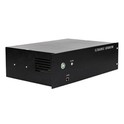
Hey there! As a supplier of 500w ultrasonic generators, I often get asked whether a 500w ultrasonic generator can be used for ultrasonic dispersion. Well, let's dive right into it and find out!
First off, what's ultrasonic dispersion anyway? Ultrasonic dispersion is a process that uses ultrasonic waves to break down and distribute particles evenly in a liquid medium. It's super useful in a bunch of industries, like chemical, pharmaceutical, food, and materials science. The high - frequency sound waves create cavitation bubbles in the liquid. When these bubbles collapse, they generate intense shockwaves that can break up agglomerated particles and disperse them uniformly.
Now, let's talk about the 500w ultrasonic generator. A 500 - watt ultrasonic generator provides a certain amount of power to the ultrasonic transducer, which then converts electrical energy into ultrasonic waves. The power of the generator plays a crucial role in the effectiveness of the ultrasonic dispersion process.
One of the key factors to consider is the nature of the particles you want to disperse. If you're dealing with relatively soft and small particles, a 500w ultrasonic generator can do a pretty good job. For example, in some cosmetic formulations, where you need to disperse fine powders like titanium dioxide or zinc oxide in a liquid base, a 500w unit can generate enough energy to break up the agglomerates and ensure a homogeneous mixture.


The viscosity of the liquid medium also matters. In low - viscosity liquids, the ultrasonic waves can propagate more easily, and a 500w generator can create sufficient cavitation to disperse the particles. Take water - based solutions as an example. The 500w ultrasonic generator can quickly and effectively disperse particles in these types of liquids. However, in high - viscosity liquids, like thick oils or pastes, the power of the 500w generator might be a bit limited. The high viscosity can dampen the propagation of ultrasonic waves and reduce the intensity of cavitation. In such cases, you might need a more powerful generator, like the 4000W Ultrasonic Generator or the 2000W Ultrasonic Generator.
Another aspect is the volume of the liquid to be processed. If you're working with small - scale batches, say a few hundred milliliters, a 500w ultrasonic generator can handle the job efficiently. It can provide enough power density to the liquid in a small container, ensuring proper dispersion. But if you're dealing with large - scale industrial production, where you have to disperse particles in large volumes of liquid, a 500w generator may not be sufficient. The power will be spread too thinly across the large volume, and you won't get the desired level of dispersion.
There are also some advantages of using a 500w ultrasonic generator for ultrasonic dispersion. It's relatively compact and energy - efficient. If your application doesn't require a huge amount of power, using a 500w unit can save you on energy costs and space. It's also easier to install and operate compared to larger, more powerful generators.
On the flip side, if you push a 500w generator beyond its limits, you might run into some problems. For instance, if you try to disperse very hard and large particles or process a large volume of high - viscosity liquid, the generator may overheat, which can damage the equipment and reduce its lifespan.
So, in conclusion, a 500w ultrasonic generator can be used for ultrasonic dispersion, but it has its limitations. It's suitable for small - scale applications, low - viscosity liquids, and relatively soft and small particles. If you have more demanding applications, you'll need to consider more powerful generators.
If you're interested in our 500W Ultrasonic Generator or want to discuss your specific ultrasonic dispersion needs, feel free to reach out. We're here to help you find the best solution for your business. Whether you need advice on power requirements, or you're ready to make a purchase, we're just a message away. Let's work together to achieve the perfect ultrasonic dispersion for your products!
References
- Ultrasonics: Fundamentals, Technologies, and Applications. John Wiley & Sons.
- Handbook of Ultrasonics and Sonochemistry. Springer.