Hey there! As a supplier of ultrasonic assisted machining (UAM) equipment, I've seen firsthand how this technology can revolutionize the machining process. One of the most significant impacts of UAM is on chip formation, and in this blog post, I'm going to break down exactly how it works.
What is Ultrasonic Assisted Machining?
Before we dive into chip formation, let's quickly go over what ultrasonic assisted machining is. In simple terms, UAM is a manufacturing process that combines traditional machining techniques with high - frequency ultrasonic vibrations. These vibrations are typically in the range of 20,000 to 40,000 Hz and are applied to either the cutting tool or the workpiece.
The addition of these ultrasonic vibrations can bring a bunch of benefits to the machining process, such as reduced cutting forces, improved surface quality, and extended tool life. But today, we're going to focus on how it affects chip formation.
How Does Chip Formation Work in Traditional Machining?
In traditional machining, like turning, milling, or drilling, the cutting tool removes material from the workpiece by shearing it. As the tool moves across the workpiece, the material ahead of the tool is subjected to high stresses. When these stresses exceed the shear strength of the material, the material fractures and forms chips.
The shape and size of the chips in traditional machining can vary widely depending on factors like the cutting speed, feed rate, depth of cut, and the properties of the workpiece material. For example, in some cases, you might get long, continuous chips, which can be a hassle because they can get tangled around the tool or the workpiece. In other cases, you might get short, discontinuous chips, which are generally easier to manage.
The Impact of Ultrasonic Assisted Machining on Chip Formation
Reduced Chip Thickness
One of the most noticeable effects of UAM on chip formation is the reduction in chip thickness. The high - frequency vibrations applied during UAM cause the cutting tool to intermittently separate from the workpiece. This intermittent contact reduces the effective cutting time and the amount of material removed in each cutting cycle. As a result, the chips formed are thinner compared to those in traditional machining.
Thinner chips are a big win because they require less energy to form. This means that the cutting forces are reduced, which in turn can lead to less wear and tear on the cutting tool. And who doesn't want their tools to last longer?
Broken and Segmented Chips
Another significant change in chip formation with UAM is the tendency to produce broken and segmented chips. The ultrasonic vibrations introduce additional stress waves into the cutting zone. These stress waves can cause the chips to fracture more easily, leading to shorter and more manageable chip segments.
Broken and segmented chips are much better than long, continuous chips. They are less likely to get tangled around the tool or the workpiece, which can improve the overall safety and efficiency of the machining process. Also, they are easier to remove from the cutting zone, reducing the chances of chip re - cutting and improving the surface quality of the machined part.
Improved Chip Flow
UAM can also improve chip flow. The ultrasonic vibrations can help to break the adhesion between the chip and the cutting tool, allowing the chips to flow more smoothly away from the cutting zone. This is especially important in difficult - to - machine materials, where chip adhesion can be a major problem.
When the chips flow better, it reduces the likelihood of chip clogging, which can cause overheating and damage to the cutting tool. And with better chip flow, you can achieve a more stable and consistent machining process.
Real - World Applications of UAM in Chip Formation
Machining Hard and Brittle Materials
UAM is particularly useful when machining hard and brittle materials, like ceramics and some high - strength alloys. In traditional machining, these materials can be a real pain because they tend to produce long, continuous chips that are difficult to control.
With UAM, the ultrasonic vibrations help to break these materials into smaller, more manageable chips. For example, when machining ceramics, the vibrations can cause micro - cracks to form in the material, which makes it easier to fracture and form chips. This not only improves the chip formation but also reduces the risk of surface damage to the ceramic workpiece.
Machining Difficult - to - Machine Metals
Difficult - to - machine metals, such as titanium alloys and nickel - based superalloys, also benefit greatly from UAM in terms of chip formation. These materials have high strength and low thermal conductivity, which can lead to high cutting temperatures and rapid tool wear in traditional machining.
The reduced chip thickness and improved chip flow provided by UAM can help to alleviate these problems. Thinner chips require less energy to form, which means less heat is generated in the cutting zone. And with better chip flow, the heat can be carried away more effectively by the chips, reducing the temperature at the tool - workpiece interface.
Our UAM Equipment and Chip Formation
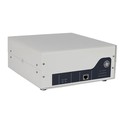
At our company, we offer a range of UAM equipment that can significantly improve chip formation in your machining processes. For example, our ResoTab - P30 Ultrasonic Vibration Tables are designed to provide high - frequency vibrations to the workpiece during machining. These vibrations can help to reduce chip thickness, break up chips, and improve chip flow, making your machining operations more efficient and cost - effective.
We also have the ResoTab - F20 Ultrasonic Vibration Tables and the ResoTab - P20 Ultrasonic Vibration Tables, which are great options depending on your specific machining needs. Whether you're machining small, precision parts or large, heavy - duty workpieces, we've got the right equipment to help you achieve better chip formation and overall machining performance.


Conclusion
In conclusion, ultrasonic assisted machining has a profound impact on chip formation. It reduces chip thickness, promotes the formation of broken and segmented chips, and improves chip flow. These changes in chip formation can lead to reduced cutting forces, improved surface quality, and extended tool life, making UAM a game - changer in the manufacturing industry.
If you're looking to improve your machining process and get better control over chip formation, I highly recommend considering our UAM equipment. We're here to help you take your machining operations to the next level. If you're interested in learning more or want to discuss your specific needs, don't hesitate to reach out. We'd love to have a chat with you and see how we can help you optimize your chip formation and overall machining performance.
References
- Altintas, Y., & Brehl, J. A. (2003). Mechanics of ultrasonic vibration–assisted machining. Journal of Manufacturing Science and Engineering, 125(1), 35 - 42.
- Guo, N., & Mears, C. (2010). Ultrasonic vibration assisted machining: a review. Proceedings of the Institution of Mechanical Engineers, Part B: Journal of Engineering Manufacture, 224(9), 1287 - 1300.
- Klocke, F., & Eisenblätter, G. (1997). High - speed cutting. Annals of the CIRP, 46(2), 519 - 535.