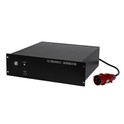
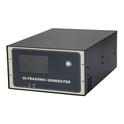
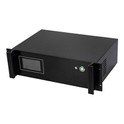
Hey there! As a supplier of the ResoLab - 1000 Lab Grade Ultrasonicator, I often get asked about how to adjust the ultrasonic intensity in a precise way. So, I thought I'd share some tips and tricks that I've picked up over the years.
First off, let's talk a bit about why precise adjustment of ultrasonic intensity is so important. In a lab setting, the ResoLab - 1000 is used for a variety of applications, like cell disruption, homogenization, and sonochemistry. Each of these applications requires a specific level of ultrasonic intensity to work effectively. If the intensity is too low, the process might not be completed, and if it's too high, it could damage the samples or the equipment.


Understanding the Basics of Ultrasonic Intensity
Before we dive into the adjustment process, it's crucial to understand what ultrasonic intensity is. Ultrasonic intensity is basically the amount of power per unit area that the ultrasonic waves carry. It's measured in watts per square centimeter (W/cm²). In the ResoLab - 1000, the intensity can be controlled through the power output settings.
The ResoLab - 1000 has a built - in power control system that allows you to adjust the power output. The power output is directly related to the ultrasonic intensity. Generally, the higher the power output, the higher the ultrasonic intensity. But it's not always a straightforward linear relationship, as other factors can also affect the intensity, such as the type of sample, the volume of the sample, and the design of the ultrasonic probe.
Factors Affecting Ultrasonic Intensity
Sample Type
Different types of samples have different acoustic properties. For example, a liquid sample with a high viscosity will absorb more ultrasonic energy than a low - viscosity liquid. This means that for a high - viscosity sample, you might need to increase the power output to achieve the same ultrasonic intensity as a low - viscosity sample.
Sample Volume
The volume of the sample also plays a significant role. In a smaller volume of sample, the ultrasonic waves are more concentrated, resulting in a higher effective intensity. On the other hand, in a larger volume, the waves spread out, and the intensity per unit area decreases. So, when working with larger volumes, you may need to increase the power output.
Ultrasonic Probe Design
The design of the ultrasonic probe can affect the distribution and intensity of the ultrasonic waves. Some probes are designed to focus the waves, which can increase the intensity in a specific area. Others are designed to spread the waves more evenly over a larger area. The ResoLab - 1000 comes with a variety of probe options, and choosing the right one for your application is essential for precise intensity adjustment.
Step - by - Step Guide to Precise Ultrasonic Intensity Adjustment
Step 1: Determine the Required Intensity
The first step is to figure out the optimal ultrasonic intensity for your specific application. You can refer to scientific literature or previous experimental data. For example, if you're doing cell disruption, different cell types might require different intensities. Some fragile cells might need a lower intensity to avoid over - disruption, while more robust cells can tolerate higher intensities.
Step 2: Set the Initial Power Output
Based on the required intensity, set an initial power output on the ResoLab - 1000. Start with a lower power output and gradually increase it if needed. This helps to prevent over - exposure of the samples to high intensities.
Step 3: Monitor the Process
During the ultrasonic process, monitor the sample and the equipment. Look for signs that the process is working as expected. For example, in cell disruption, you can check for cell lysis under a microscope. If the process seems to be progressing too slowly, you can increase the power output slightly.
Step 4: Make Fine - Tuning Adjustments
Once you've made an initial adjustment, make fine - tuning adjustments based on the feedback from the process. Small changes in the power output can make a big difference in the ultrasonic intensity. Keep in mind that the relationship between power output and intensity might not be perfectly linear, so you need to make these adjustments carefully.
Using Additional Tools for Precise Adjustment
In some cases, you might want to use additional tools to measure and adjust the ultrasonic intensity more precisely. For example, an ultrasonic power meter can be used to measure the actual power output of the ResoLab - 1000. This can help you verify that the power output settings on the equipment are accurate.
Another useful tool is a hydrophone. A hydrophone can measure the ultrasonic pressure in the sample, which is related to the ultrasonic intensity. By using a hydrophone, you can get a more accurate picture of the intensity distribution in the sample.
Comparing with Other ResoLab Ultrasonicator Models
If you're considering other models in the ResoLab series, like the ResoLab - 2000 Lab Grade Ultrasonicator or the ResoLab - 500 Lab Grade Ultrasonicator, the basic principles of ultrasonic intensity adjustment are similar. However, each model has its own power range and capabilities.
The ResoLab - 2000 has a higher power output than the ResoLab - 1000, which means it can generate higher ultrasonic intensities. This makes it suitable for applications that require more power, such as large - scale homogenization. On the other hand, the ResoLab - 500 has a lower power output, which is ideal for small - scale or more delicate applications.
Conclusion and Call to Action
Adjusting the ultrasonic intensity in a precise way for the ResoLab - 1000 Lab Grade Ultrasonicator is a crucial skill for anyone using this equipment in a lab setting. By understanding the factors that affect ultrasonic intensity and following the step - by - step guide, you can ensure that your experiments are successful.
If you're interested in purchasing the ResoLab - 1000 or any other ResoLab ultrasonicator models, feel free to reach out to us. We're here to help you choose the right equipment for your needs and provide you with all the support you need for its operation.
References
- Ultrasonics in Analytical Chemistry, John Wiley & Sons, Inc.
- Handbook of Sonochemistry, Royal Society of Chemistry.