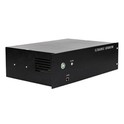
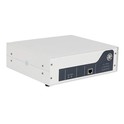
Hey there! As a supplier of 500w ultrasonic generators, I often get asked if our 500w ultrasonic generator can be used for ultrasonic atomization. Well, let's dig into this topic and find out.
First off, let's understand what ultrasonic atomization is. Ultrasonic atomization is a process where high - frequency ultrasonic waves are used to break up a liquid into tiny droplets. These droplets can then be dispersed into the air, which has a wide range of applications, like in humidifiers, spray painting, and even in some medical nebulizers.
Now, can a 500w ultrasonic generator do the job? The answer is, it depends.
Factors Affecting the Use of a 500w Ultrasonic Generator for Atomization
Liquid Properties
The type of liquid you want to atomize plays a huge role. If it's a low - viscosity liquid like water, a 500w ultrasonic generator can work quite well. Water has a relatively simple molecular structure and low resistance to the ultrasonic waves. The 500w power is usually sufficient to create the cavitation effect needed to break the water into fine droplets.
However, if you're dealing with a high - viscosity liquid, such as thick oils or some chemical solutions, the 500w power might not be enough. High - viscosity liquids have stronger intermolecular forces, which require more energy to break them apart. In such cases, the ultrasonic waves from a 500w generator may not be able to generate enough cavitation bubbles to atomize the liquid effectively.
Desired Droplet Size
The size of the droplets you need also matters. If you're looking for very fine droplets, like in a medical nebulizer where the droplets need to be small enough to reach the lungs, a 500w generator can work for certain liquids. But if you want larger droplets for applications like some industrial spray - coating processes, the power might need to be adjusted accordingly. A 500w generator might produce droplets that are either too small or not evenly sized if the power - to - liquid - requirement ratio is off.
Atomization Area
The area over which you want to perform the atomization is another factor. For a small - scale application, like a personal humidifier in a small room, a 500w ultrasonic generator is more than capable. It can efficiently atomize the water and disperse the droplets within a limited space. But for large - scale industrial applications, such as in a big factory hall where you need to cover a large area with atomized liquid, a 500w generator may not be sufficient. You might need to use multiple 500w generators or switch to a higher - power model, like the 2000W Ultrasonic Generator, 3000W Ultrasonic Generator, or 4000W Ultrasonic Generator.
Advantages of Using a 500w Ultrasonic Generator for Atomization
Energy Efficiency
One of the big perks of using a 500w ultrasonic generator for atomization is its energy efficiency. Compared to higher - power generators, it consumes less electricity. This is great for applications where you're running the atomization process for long periods, like in a 24/7 humidifying setup. You'll save on energy costs while still getting the job done for suitable liquids and small - to - medium - scale areas.
Cost - Effectiveness
In terms of cost, a 500w ultrasonic generator is generally more affordable than higher - power models. If your atomization needs are not too demanding, investing in a 500w generator can be a smart financial decision. You get a reliable piece of equipment without breaking the bank.
Portability
500w ultrasonic generators are often more compact and lightweight compared to their high - power counterparts. This makes them easy to move around and install in different locations. Whether you want to use it in a laboratory for small - scale experiments or in a small office for humidification, you can easily relocate the generator as needed.
Limitations
Limited Power for High - Demand Applications
As mentioned earlier, for large - scale industrial atomization or for atomizing high - viscosity liquids, the 500w power is a limitation. The generator may struggle to produce the required amount of atomized liquid or may not be able to break down the liquid effectively.


Slower Atomization Rate
In some cases, especially when dealing with larger volumes of liquid or when a high atomization rate is needed, a 500w generator might be slower compared to higher - power generators. This can be a drawback in time - sensitive applications.
Making the Right Decision
So, how do you decide if a 500w ultrasonic generator is right for your ultrasonic atomization needs? First, assess your liquid properties. If it's a low - viscosity liquid and you have a small - to - medium - scale application, a 500w generator is a good bet.
Next, think about the droplet size and atomization area. If you need fine droplets and a small coverage area, it should work well. But if you're looking at larger areas or have more demanding requirements, you might want to consider upgrading to a higher - power generator.
If you're still not sure, don't hesitate to reach out. We're here to help you figure out the best solution for your specific atomization needs. Whether it's a 500w ultrasonic generator or one of our more powerful models like the 2000W Ultrasonic Generator, 3000W Ultrasonic Generator, or 4000W Ultrasonic Generator, we can provide you with all the information you need.
If you're interested in purchasing an ultrasonic generator for your atomization project, feel free to contact us for more details and to start a procurement discussion. We're eager to work with you and find the perfect ultrasonic solution for your business.
References
- "Ultrasonic Atomization: Principles and Applications" by some well - known ultrasonic research institute
- Industry reports on ultrasonic generator usage in various atomization applications