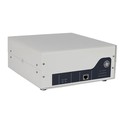
In the realm of water treatment, the search for efficient, cost - effective, and environmentally friendly methods is a continuous journey. One technology that has been garnering increasing attention is the use of ultrasonic waves. As a supplier of universal ultrasonic generators, I am often asked whether a universal ultrasonic generator can be used for water treatment. In this blog post, I will explore this question in detail, delving into the principles of ultrasonic water treatment, the capabilities of universal ultrasonic generators, and the practical applications in real - world scenarios.
The Principles of Ultrasonic Water Treatment
Ultrasonic waves are sound waves with frequencies higher than the upper audible limit of human hearing, typically above 20 kHz. When ultrasonic waves propagate through a liquid medium such as water, they create alternating high - pressure and low - pressure cycles. During the low - pressure phase, small vapor bubbles, known as cavitation bubbles, are formed in the liquid. These bubbles grow until they reach a critical size and then collapse violently during the high - pressure phase. This phenomenon is called cavitation.
The collapse of cavitation bubbles generates extreme conditions in the immediate vicinity, including high temperatures (up to 5000 K) and high pressures (up to 1000 atm). These extreme conditions can break chemical bonds, generate free radicals, and produce mechanical shear forces. In the context of water treatment, these effects can be harnessed to achieve several important goals:
- Disinfection: The high temperatures and free radicals generated during cavitation can kill bacteria, viruses, and other microorganisms in the water. For example, the free radicals can react with the cell membranes of microorganisms, causing damage and ultimately leading to their death.
- Decomposition of Organic Pollutants: Ultrasonic cavitation can break down complex organic molecules into simpler, more biodegradable compounds. This is particularly useful for treating industrial wastewater containing persistent organic pollutants such as pesticides, dyes, and pharmaceuticals.
- Scale Removal: The mechanical shear forces generated by cavitation can dislodge scale deposits on the surfaces of pipes and equipment. Scale is a common problem in water systems, as it can reduce the efficiency of heat exchangers, pumps, and other components.
Capabilities of Universal Ultrasonic Generators
A universal ultrasonic generator is designed to produce ultrasonic waves at a wide range of frequencies and power levels. This flexibility makes it suitable for a variety of applications, including water treatment.


Frequency Adjustability: Different water treatment applications may require different ultrasonic frequencies. For example, lower frequencies (e.g., 20 - 40 kHz) are generally more effective for generating cavitation and are suitable for tasks such as scale removal and disinfection. Higher frequencies (e.g., 100 - 500 kHz) are better for applications where a more uniform distribution of ultrasonic energy is required, such as the decomposition of organic pollutants. A universal ultrasonic generator allows users to adjust the frequency according to the specific requirements of the water treatment process.
Power Control: The power of the ultrasonic generator determines the intensity of the ultrasonic waves and, consequently, the extent of the cavitation effects. Higher power levels can generate more intense cavitation, which is beneficial for treating heavily contaminated water or for large - scale water treatment applications. Our company offers a range of universal ultrasonic generators with different power levels, such as the 1000W Ultrasonic Generator, 2000W Ultrasonic Generator, and 4000W Ultrasonic Generator. These generators can be selected based on the volume of water to be treated and the level of contamination.
Compatibility with Different Transducers: A universal ultrasonic generator can be paired with different types of ultrasonic transducers. Transducers convert electrical energy from the generator into ultrasonic waves. Depending on the application, different transducer designs may be required. For example, immersion transducers can be directly placed in the water, while plate - type transducers can be mounted on the walls of a water tank. The ability to work with different transducers further enhances the versatility of the universal ultrasonic generator in water treatment applications.
Practical Applications in Water Treatment
Industrial Wastewater Treatment
Industrial processes often generate large volumes of wastewater containing various pollutants. Universal ultrasonic generators can be used in combination with other treatment methods, such as chemical oxidation and biological treatment, to improve the overall treatment efficiency. For example, in the treatment of dye - containing wastewater, ultrasonic cavitation can break down the dye molecules into smaller fragments, making them more susceptible to subsequent chemical oxidation. This can reduce the amount of chemicals required and improve the quality of the treated water.
Drinking Water Treatment
In drinking water treatment, the main goal is to remove pathogens and contaminants to ensure the safety of the water supply. Universal ultrasonic generators can be used as a supplementary disinfection method. By generating free radicals and creating high - energy environments, ultrasonic waves can kill bacteria and viruses without the use of chemicals. This is particularly beneficial in areas where access to chemical disinfectants is limited or where there are concerns about the formation of disinfection by - products.
Cooling Tower Water Treatment
Cooling towers are widely used in industrial and commercial facilities to remove heat from processes. However, the water in cooling towers is prone to the growth of bacteria, algae, and scale formation. Universal ultrasonic generators can be installed in cooling tower systems to prevent these problems. The ultrasonic waves can disrupt the growth of microorganisms and prevent the formation of scale on the heat exchange surfaces, thereby improving the efficiency of the cooling tower and reducing maintenance costs.
Challenges and Considerations
While universal ultrasonic generators offer many advantages for water treatment, there are also some challenges and considerations that need to be addressed:
Energy Consumption: Ultrasonic water treatment can be energy - intensive, especially when high - power generators are used. Therefore, it is important to optimize the operating parameters of the generator to minimize energy consumption while achieving the desired treatment效果.
Treatment Efficiency: The efficiency of ultrasonic water treatment depends on several factors, such as the frequency, power, treatment time, and the characteristics of the water being treated. In some cases, ultrasonic treatment alone may not be sufficient to achieve the required water quality standards, and it may need to be combined with other treatment methods.
Equipment Cost: Universal ultrasonic generators can be relatively expensive, especially those with high power and advanced features. However, the long - term benefits, such as reduced chemical usage and lower maintenance costs, may offset the initial investment.
Conclusion
In conclusion, a universal ultrasonic generator can indeed be used for water treatment. Its ability to generate ultrasonic waves at different frequencies and power levels, combined with its compatibility with various transducers, makes it a versatile tool for a wide range of water treatment applications. From industrial wastewater treatment to drinking water disinfection and cooling tower water maintenance, ultrasonic technology offers a promising alternative to traditional treatment methods.
If you are interested in exploring the use of universal ultrasonic generators for your water treatment needs, I encourage you to contact us for more information. We can provide you with detailed product specifications, technical support, and customized solutions based on your specific requirements. Let's work together to find the most effective and sustainable water treatment solutions.
References
- Mason, T. J., & Lorimer, J. P. (2002). Applied Sonochemistry: Uses of Power Ultrasound in Chemistry and Chemical Engineering. Wiley.
- Gogate, P. R., & Pandit, A. B. (2004). A review of imperative technologies for wastewater treatment I: oxidation technologies at ambient conditions. Advances in Environmental Research, 8(5), 501 - 551.
- Hua, I., & Hoffmann, M. R. (1997). Sonochemistry: Environmental science and engineering applications. Environmental Science & Technology, 31(12), 3186 - 3196.