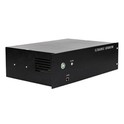
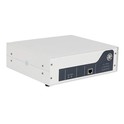
In the realm of modern industrial production, quality control stands as a cornerstone for ensuring product reliability, performance, and safety. As a leading supplier of ultrasonic rings, I am frequently asked about the potential applications of our products in quality control processes. In this blog post, I will delve into the science behind ultrasonic technology, explore how ultrasonic rings can be utilized for quality control, and introduce our flagship products, the ResoRing-25 Ultrasonic Ring and ResoRing-30 Ultrasonic Ring.
Understanding Ultrasonic Technology
Ultrasonic waves are sound waves with frequencies higher than the upper audible limit of human hearing, typically above 20,000 Hz. These waves possess unique properties that make them valuable in a wide range of industrial applications, including cleaning, welding, and non-destructive testing. When an ultrasonic wave propagates through a medium, it creates alternating high-pressure and low-pressure regions, known as compression and rarefaction. These pressure variations can cause microscopic bubbles to form and collapse in a process called cavitation.
Cavitation is the key mechanism behind many ultrasonic applications. When the bubbles collapse, they generate intense shock waves and high temperatures, which can be used to clean surfaces, break down contaminants, and detect defects in materials. The ability to control and manipulate these cavitation effects is what makes ultrasonic technology so versatile and effective in quality control.
Ultrasonic Rings: A Compact and Powerful Solution
Ultrasonic rings are a specialized type of ultrasonic transducer designed to generate a uniform and intense ultrasonic field within a confined space. These rings consist of a piezoelectric material that converts electrical energy into mechanical vibrations, which in turn produce ultrasonic waves. The design of the ring allows for the efficient transmission of ultrasonic energy, making it ideal for applications where precise control and high-intensity ultrasonic fields are required.
One of the main advantages of ultrasonic rings is their compact size and flexibility. They can be easily integrated into existing production lines or used in portable devices for on-site quality control. Additionally, ultrasonic rings can be customized to meet specific application requirements, such as frequency, power, and diameter. This flexibility makes them suitable for a wide range of industries, including automotive, aerospace, electronics, and medical.
Applications of Ultrasonic Rings in Quality Control
There are several ways in which ultrasonic rings can be used for quality control. Here are some of the most common applications:
1. Cleaning and Surface Preparation
Ultrasonic cleaning is a well-established method for removing contaminants from surfaces. By generating high-intensity ultrasonic waves, ultrasonic rings can create cavitation bubbles that effectively dislodge dirt, grease, and other particles from the surface of a part. This process is particularly useful for cleaning complex geometries and hard-to-reach areas.


In quality control, ultrasonic cleaning can be used to prepare parts for inspection. By removing surface contaminants, it becomes easier to detect defects such as cracks, pores, and inclusions. Additionally, ultrasonic cleaning can help to improve the accuracy of surface finish measurements by ensuring that the surface is free from debris.
2. Non-Destructive Testing (NDT)
Non-destructive testing is a critical part of quality control in many industries. It involves the use of various techniques to detect internal defects in materials without causing damage to the part. Ultrasonic testing is one of the most widely used NDT methods, and ultrasonic rings can play a crucial role in this process.
When an ultrasonic wave encounters a defect in a material, it can be reflected, refracted, or absorbed. By analyzing the characteristics of the reflected or transmitted waves, it is possible to detect the presence, location, and size of the defect. Ultrasonic rings can be used to generate and detect these ultrasonic waves, providing a fast and accurate way to inspect parts for internal defects.
3. Material Characterization
In addition to detecting defects, ultrasonic rings can also be used to characterize the properties of materials. By measuring the velocity and attenuation of ultrasonic waves in a material, it is possible to determine its density, elasticity, and other mechanical properties. This information can be used to ensure that the material meets the required specifications and to identify any variations in material properties that could affect the performance of the final product.
4. Process Monitoring
Ultrasonic rings can also be used for real-time process monitoring. By continuously monitoring the ultrasonic signals generated during a manufacturing process, it is possible to detect changes in the process parameters that could indicate a potential quality issue. For example, in a welding process, changes in the ultrasonic signals could indicate a change in the weld quality, such as a lack of fusion or a porosity defect. By detecting these issues early, it is possible to take corrective action before the product is completed, reducing the risk of costly rework or scrap.
Our Flagship Products: ResoRing-25 and ResoRing-30
At our company, we offer two flagship ultrasonic ring products: the ResoRing-25 Ultrasonic Ring and the ResoRing-30 Ultrasonic Ring. These products are designed to provide high-performance and reliable ultrasonic solutions for a wide range of quality control applications.
The ResoRing-25 Ultrasonic Ring is a compact and powerful transducer with a diameter of 25 mm. It operates at a frequency of 40 kHz and can generate a maximum power of 100 W. This ring is ideal for applications where a high-intensity ultrasonic field is required in a small space, such as cleaning small parts or detecting defects in thin materials.
The ResoRing-30 Ultrasonic Ring is a larger and more powerful transducer with a diameter of 30 mm. It operates at a frequency of 28 kHz and can generate a maximum power of 200 W. This ring is suitable for applications where a larger ultrasonic field is required, such as cleaning larger parts or inspecting thick materials.
Both the ResoRing-25 and ResoRing-30 Ultrasonic Rings are made from high-quality materials and are designed to provide long-lasting performance and reliability. They are also easy to install and operate, making them a cost-effective solution for quality control applications.
Conclusion
In conclusion, ultrasonic rings offer a compact, powerful, and versatile solution for quality control in a wide range of industries. By leveraging the unique properties of ultrasonic waves and cavitation, these rings can be used to clean surfaces, detect defects, characterize materials, and monitor processes. Our ResoRing-25 Ultrasonic Ring and ResoRing-30 Ultrasonic Ring are two of the most advanced and reliable ultrasonic ring products on the market, offering high-performance and customizable solutions for your quality control needs.
If you are interested in learning more about how ultrasonic rings can be used for quality control in your industry, or if you have any questions about our products, please feel free to contact us. We would be happy to discuss your specific requirements and provide you with a customized solution that meets your needs.
References
- "Ultrasonic Testing: Principles and Applications" by David A. Hutchins
- "Non-Destructive Testing Handbook, Volume 7: Ultrasonic Testing" by the American Society for Nondestructive Testing
- "Ultrasonic Cleaning: Theory and Practice" by John W. Gooch