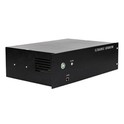
In the realm of laboratory equipment, the choice of the right tool for sample extraction can significantly impact the accuracy and efficiency of scientific research. One such piece of equipment that has been garnering attention is the ResoLab - 500 Lab Grade Ultrasonicator. As a supplier of this high - end ultrasonicator, I am often asked whether the ResoLab - 500 can be effectively used for sample extraction. In this blog, we will delve into the capabilities of the ResoLab - 500 and explore its potential in sample extraction processes.
Understanding Ultrasonication in Sample Extraction
Before we specifically discuss the ResoLab - 500, it is essential to understand the principle of ultrasonication in sample extraction. Ultrasonication is a process that uses high - frequency sound waves (usually above 20 kHz) to create cavitation bubbles in a liquid medium. When these bubbles collapse, they generate intense local heat, high pressure, and strong shear forces. These forces can break down cell walls, disrupt molecular interactions, and enhance the mass transfer between the sample matrix and the extraction solvent.
This technology has been widely applied in various fields, such as food science, pharmaceuticals, environmental science, and biotechnology. For example, in the extraction of bioactive compounds from plants, ultrasonication can significantly increase the extraction yield and reduce the extraction time compared to traditional methods like Soxhlet extraction or maceration.
Features of the ResoLab - 500 Lab Grade Ultrasonicator
The ResoLab - 500 Lab Grade Ultrasonicator is a state - of - the - art piece of equipment designed with several features that make it suitable for sample extraction.


1. Adjustable Power Output
The ResoLab - 500 offers an adjustable power output, typically ranging from a few watts to several hundred watts. This adjustability allows researchers to optimize the extraction conditions according to the nature of the sample and the extraction solvent. For instance, when extracting heat - sensitive compounds, a lower power setting can be used to minimize thermal degradation, while a higher power setting may be employed for more robust samples.
2. Precise Frequency Control
It also provides precise frequency control. Different samples may require different ultrasonic frequencies for optimal extraction. The ResoLab - 500 can be tuned to the appropriate frequency, ensuring that the cavitation process is most effective for the specific sample being extracted. This precision is crucial for achieving high - quality extraction results.
3. Temperature Monitoring and Control
During ultrasonication, the local heat generated by cavitation can cause an increase in the temperature of the extraction medium. The ResoLab - 500 is equipped with a temperature monitoring and control system. This system can prevent overheating of the sample, which is particularly important when extracting thermally unstable compounds. By maintaining a constant temperature, the integrity of the target compounds can be preserved, and the extraction efficiency can be improved.
4. User - Friendly Interface
The ResoLab - 500 features a user - friendly interface that allows researchers to easily set and adjust the operating parameters. This simplicity makes it accessible to both experienced researchers and those new to ultrasonication technology. The interface also provides real - time feedback on the operating status, such as power output, frequency, and temperature, enabling users to closely monitor the extraction process.
Applications of the ResoLab - 500 in Sample Extraction
The ResoLab - 500 can be used in a wide range of sample extraction applications.
1. Plant Extracts
In the field of natural product research, the ResoLab - 500 can be used to extract bioactive compounds from plants, such as flavonoids, alkaloids, and essential oils. The high - energy cavitation forces can break the cell walls of plant tissues, releasing the target compounds into the extraction solvent. This results in a higher extraction yield and a shorter extraction time compared to traditional methods.
2. Food Samples
For food analysis, the ResoLab - 500 can be employed to extract nutrients, additives, and contaminants from food samples. For example, it can be used to extract vitamins from fruits and vegetables, or to detect pesticide residues in agricultural products. The efficient extraction process provided by the ultrasonicator ensures accurate and reliable analysis results.
3. Environmental Samples
In environmental science, the ResoLab - 500 can assist in the extraction of pollutants from soil, sediment, and water samples. The strong shear forces generated by ultrasonication can help to desorb pollutants from the sample matrix, facilitating their subsequent analysis. This is crucial for environmental monitoring and pollution control.
4. Pharmaceutical Samples
In the pharmaceutical industry, the ResoLab - 500 can be used for the extraction of active pharmaceutical ingredients (APIs) from raw materials. It can improve the extraction efficiency and purity of the APIs, which is essential for drug development and production.
Comparison with Other ResoLab Ultrasonicators
While the ResoLab - 500 is a powerful tool for sample extraction, our product line also includes other models, such as the ResoLab - 1000 Lab Grade Ultrasonicator and the ResoLab - 2000 Lab Grade Ultrasonicator.
The ResoLab - 1000 and ResoLab - 2000 offer higher power outputs and larger sample processing capacities compared to the ResoLab - 500. These models are more suitable for large - scale sample extraction or when dealing with highly resistant samples. However, for smaller - scale research or when precise control of extraction conditions is required, the ResoLab - 500 remains an excellent choice.
Limitations and Considerations
Although the ResoLab - 500 has many advantages for sample extraction, there are also some limitations and considerations.
1. Sample Compatibility
Not all samples are suitable for ultrasonication. Some samples may be too fragile or sensitive to the high - energy forces generated by cavitation. For example, certain proteins or enzymes may be denatured during ultrasonication. Therefore, it is necessary to carefully evaluate the sample compatibility before using the ResoLab - 500 for extraction.
2. Solvent Selection
The choice of extraction solvent also plays an important role in the extraction process. The ResoLab - 500 can work with a variety of solvents, but the properties of the solvent, such as its viscosity and surface tension, can affect the cavitation process. It is important to select the appropriate solvent that is compatible with the sample and the target compounds.
Conclusion
In conclusion, the ResoLab - 500 Lab Grade Ultrasonicator is a versatile and powerful tool for sample extraction. Its adjustable power output, precise frequency control, temperature monitoring and control, and user - friendly interface make it well - suited for a wide range of extraction applications. Whether you are conducting research in plant extracts, food analysis, environmental science, or the pharmaceutical industry, the ResoLab - 500 can provide efficient and reliable sample extraction solutions.
If you are interested in learning more about the ResoLab - 500 or our other ResoLab ultrasonicators, or if you are considering purchasing one for your laboratory, we encourage you to contact us for a detailed consultation. Our team of experts is ready to assist you in selecting the most suitable equipment for your specific needs and to provide you with professional technical support.
References
- Mason, T. J. (2004). Sonochemistry: industrial applications. Chemical Society Reviews, 33(3), 168 - 178.
- Vinatoru, M. (2001). An overview of the ultrasonically assisted extraction of bioactive principles from herbs. Ultrasonics Sonochemistry, 8(3), 131 - 139.
- Chemat, F., & Cravotto, G. (2013). Applications of ultrasound in food technology: processing, preservation and extraction. Ultrasonics Sonochemistry, 20(3), 931 - 949.