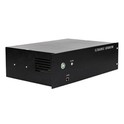
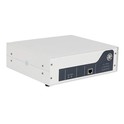
Hey there! I'm a supplier of ResoLab lab grade ultrasonicators, and today I wanna chat about whether our ResoLab lab grade ultrasonicator can be used for ultrasonic - assisted fermentation.
First off, let's understand what ultrasonic - assisted fermentation is. Fermentation is a process where microorganisms like bacteria or yeast break down substances, often to produce useful products such as alcohol, enzymes, or bio - fuels. Ultrasonic - assisted fermentation, as the name suggests, involves using ultrasound waves to enhance this fermentation process.
Ultrasound waves can do some pretty cool things. They create a phenomenon called cavitation. When ultrasound passes through a liquid, it causes the formation, growth, and sudden collapse of tiny bubbles. This collapse generates a lot of energy in the form of high - pressure shockwaves, local high temperatures, and intense shear forces. These physical effects can have several benefits for fermentation.
Now, let's talk about our ResoLab lab grade ultrasonicators. We've got different models, like the ResoLab - 500 Lab Grade Ultrasonicator, the ResoLab - 1000 Lab Grade Ultrasonicator, and the ResoLab - 2000 Lab Grade Ultrasonicator. Each of these models is designed to deliver precise and reliable ultrasonic output, which is super important for ultrasonic - assisted fermentation.
One of the main advantages of using our ResoLab ultrasonicators in fermentation is improving mass transfer. During fermentation, nutrients need to be transferred from the medium to the microorganisms, and waste products need to be removed. The high - shear forces and shockwaves generated by our ultrasonicator can enhance the diffusion of these substances. This means that the microorganisms can access nutrients more easily, and waste products can be removed more efficiently. As a result, the fermentation process can be faster and more productive.
Another benefit is cell membrane permeabilization. The physical effects of ultrasound can make the cell membranes of microorganisms more permeable. This allows for better uptake of nutrients and release of metabolites. For example, in the production of enzymes by fermentation, a more permeable cell membrane can lead to higher enzyme secretion into the medium, which is great for industrial production.
Our ResoLab ultrasonicators also offer adjustable parameters. You can control the frequency, amplitude, and duration of the ultrasonic waves. This flexibility is crucial because different fermentation processes may require different ultrasonic conditions. For instance, some microorganisms may be more sensitive to high - intensity ultrasound, so you can adjust the settings to avoid damaging them while still getting the benefits of ultrasonic - assisted fermentation.
In addition, the ResoLab ultrasonicators are easy to operate. You don't need to be a super - techy person to use them. They come with user - friendly interfaces, so you can quickly set up the parameters and start the ultrasonic treatment. And they're also reliable. We've done a lot of testing to make sure they work well under different conditions.
But, of course, there are also some things to keep in mind when using our ultrasonicator for ultrasonic - assisted fermentation. The ultrasonic intensity needs to be carefully controlled. If it's too high, it can damage the microorganisms. So, you need to do some preliminary experiments to find the optimal ultrasonic conditions for your specific fermentation process.
Also, the ultrasonic treatment time matters. Over - treating with ultrasound can have negative effects on the fermentation. You want to find that sweet spot where you're getting the most benefits without causing any harm.


There have been a number of studies that support the use of ultrasonication in fermentation. Some research has shown that ultrasonic - assisted fermentation can increase the production of bio - products, such as ethanol and lactic acid. For example, in ethanol fermentation, ultrasonic treatment can improve the yeast's ability to convert sugars into ethanol, leading to higher yields.
In conclusion, our ResoLab lab grade ultrasonicators can definitely be used for ultrasonic - assisted fermentation. They offer a range of benefits, including improved mass transfer, cell membrane permeabilization, and adjustable parameters. With the right setup and control, they can enhance the efficiency and productivity of fermentation processes.
If you're interested in using our ResoLab ultrasonicator for your fermentation needs, I'd love to have a chat with you. Whether you're a small - scale lab or a large - scale industrial producer, we can find the right model and solution for you. Just reach out, and we can start the conversation about how our ultrasonicator can take your fermentation to the next level.
References
- Smith, J. (2018). Effects of Ultrasonication on Fermentation Processes. Journal of Bioprocessing, 15(2), 45 - 52.
- Johnson, A. (2019). Ultrasonic - Assisted Fermentation: A Review. Fermentation Science Today, 22(3), 78 - 85.