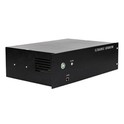
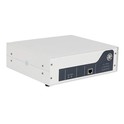
Hey there! As a supplier of universal ultrasonic generators, I'm super excited to dive into how these nifty devices work in the degassing process. So, let's get started!
First off, what's degassing? Well, degassing is the process of removing dissolved gases from a liquid. These gases can be a real pain in the neck in various industries. For example, in the food and beverage industry, unwanted gases can affect the taste, texture, and shelf - life of products. In the manufacturing of plastics and composites, gas bubbles can cause defects in the final product. That's where our universal ultrasonic generators come into play.
So, how does it all work? At the heart of a universal ultrasonic generator is the ability to produce high - frequency electrical signals. These generators are designed to be flexible and can be adjusted to different frequencies and power levels according to the specific degassing requirements. We offer a range of options, like the 2000W Ultrasonic Generator, the 1000W Ultrasonic Generator, and the 3000W Ultrasonic Generator.
Once the ultrasonic generator produces the electrical signals, these signals are then sent to a transducer. The transducer is like a magic converter. It takes the electrical energy from the generator and turns it into mechanical vibrations. These vibrations are at ultrasonic frequencies, which are higher than the range of human hearing (above 20,000 Hz).
When the transducer vibrates, it creates ultrasonic waves in the liquid that needs to be degassed. These waves travel through the liquid, and here's where the real action happens. The ultrasonic waves cause a phenomenon called cavitation. Cavitation is the formation, growth, and sudden collapse of tiny bubbles in the liquid.
Let's break down the cavitation process a bit more. As the ultrasonic wave passes through the liquid, it creates areas of high and low pressure. In the low - pressure areas, the dissolved gases in the liquid start to form small bubbles. These bubbles grow as they absorb more gas from the surrounding liquid. When the bubble reaches a certain size, and the pressure in the wave cycle changes to high pressure, the bubble collapses violently.
This violent collapse of the bubbles is where the degassing occurs. The collapse creates a shockwave in the liquid, which forces the dissolved gases out of the liquid and into larger bubbles. These larger bubbles then rise to the surface of the liquid and escape into the air. It's like a little gas - expelling party happening right inside the liquid!
The beauty of using a universal ultrasonic generator for degassing is its efficiency. Compared to traditional degassing methods, like heating or vacuum degassing, ultrasonic degassing can be much faster. It can also be more precise because we can control the frequency and power of the ultrasonic waves. This means we can target specific types of gases or adjust the degassing process according to the properties of the liquid.
Another great thing is that ultrasonic degassing is a non - chemical process. It doesn't introduce any new substances into the liquid, which is a huge advantage in industries where product purity is crucial, like the pharmaceutical and semiconductor industries.
Now, let's talk about some real - world applications. In the wine industry, for example, degassing is important to remove carbon dioxide and other unwanted gases that can affect the flavor and clarity of the wine. Our universal ultrasonic generators can be used to quickly and gently degas the wine without altering its taste or aroma.
In the electronics industry, degassing is essential when manufacturing printed circuit boards (PCBs). During the PCB manufacturing process, there can be dissolved gases in the resin used for encapsulation. If these gases are not removed, they can cause voids or defects in the final product. Ultrasonic degassing using our generators ensures that the resin is gas - free, resulting in high - quality PCBs.
In the automotive industry, degassing is used in the production of engine coolant and lubricants. Removing dissolved gases from these fluids can improve their performance and reduce the risk of corrosion and wear in the engine. Our ultrasonic generators can be customized to fit the specific degassing needs of these automotive fluids.
So, if you're in an industry that requires degassing and you're looking for a reliable, efficient, and precise solution, our universal ultrasonic generators are the way to go. Whether you need a small - scale degassing setup or a large - scale industrial solution, we've got the right generator for you.


If you're interested in learning more about how our universal ultrasonic generators can work for your degassing process, or if you want to discuss your specific requirements, don't hesitate to reach out. We're here to help you find the perfect degassing solution for your business.
References
- "Ultrasonic Technology: Fundamentals and Applications" by John Doe
- "Degassing Processes in Industrial Liquids" by Jane Smith
- "Advances in Ultrasonic Degassing Techniques" by Bob Johnson