Composite materials have gained significant popularity in various industries due to their high strength-to-weight ratio, corrosion resistance, and excellent mechanical properties. Ultrasonic assisted machining (UAM) has emerged as a promising technique for machining composite materials, offering improved cutting performance, reduced tool wear, and enhanced surface quality. As a supplier of ultrasonic assisted machining equipment, I have witnessed firsthand the challenges that manufacturers face when using this technology for composite materials. In this blog post, I will discuss some of the key challenges in ultrasonic assisted machining of composite materials and how our products can help overcome them.
Material Heterogeneity and Anisotropy
One of the primary challenges in machining composite materials is their inherent heterogeneity and anisotropy. Composite materials are typically made up of two or more distinct phases, such as fibers and a matrix, which have different mechanical properties. This heterogeneity can lead to uneven cutting forces, tool wear, and surface damage during machining. Additionally, the anisotropic nature of composite materials means that their mechanical properties vary depending on the direction of the fibers. This can make it difficult to achieve consistent machining results, especially when cutting in different directions.
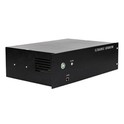
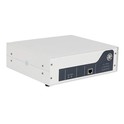
To address these challenges, our ultrasonic vibration tables, such as the ResoTab-F20 Ultrasonic Vibration Tables, ResoTab-P20 Ultrasonic Vibration Tables, and ResoTab-P30 Ultrasonic Vibration Tables, are designed to provide precise and controlled ultrasonic vibrations to the workpiece. These vibrations help to reduce the cutting forces and improve the chip formation process, resulting in more consistent machining results. By applying ultrasonic vibrations in the appropriate direction, we can also minimize the effects of material anisotropy and achieve better surface quality.
Fiber Pull-Out and Delamination
Another common challenge in machining composite materials is fiber pull-out and delamination. Fiber pull-out occurs when the fibers are pulled out of the matrix during machining, leaving behind voids and rough surfaces. Delamination, on the other hand, refers to the separation of the layers in a laminated composite material. These issues can significantly affect the mechanical properties and performance of the machined parts.
The ultrasonic vibrations provided by our equipment can help to reduce fiber pull-out and delamination by improving the cutting mechanism. The high-frequency vibrations create a micro-cutting effect, which helps to break the fibers cleanly and minimize the damage to the matrix. Additionally, the vibrations can reduce the friction between the tool and the workpiece, preventing the fibers from being pulled out during cutting. Our ultrasonic vibration tables can also be adjusted to optimize the vibration parameters, such as amplitude and frequency, to further reduce the risk of fiber pull-out and delamination.
Tool Wear and Tool Life
Tool wear is a major concern in machining composite materials, especially when using conventional machining methods. The hard and abrasive nature of the fibers in composite materials can cause rapid tool wear, leading to increased machining costs and reduced productivity. In ultrasonic assisted machining, the ultrasonic vibrations can help to reduce tool wear by reducing the cutting forces and improving the chip evacuation process. However, the effectiveness of this technique depends on the proper selection of the tool material and geometry, as well as the optimization of the ultrasonic vibration parameters.
We offer a range of ultrasonic assisted machining solutions that are specifically designed to minimize tool wear and extend tool life. Our ultrasonic vibration tables can be used in combination with high-quality cutting tools made from materials such as diamond or cubic boron nitride (CBN). These tools are more resistant to wear and can withstand the high cutting forces and abrasive nature of composite materials. By optimizing the ultrasonic vibration parameters, we can also ensure that the cutting tools are operating at their maximum efficiency, further reducing tool wear and extending tool life.
Heat Generation and Thermal Damage
Heat generation is another significant challenge in machining composite materials. The high cutting forces and friction during machining can generate a large amount of heat, which can cause thermal damage to the workpiece and the cutting tool. Thermal damage can lead to changes in the material properties, such as reduced strength and stiffness, and can also cause delamination and fiber pull-out.
Our ultrasonic assisted machining equipment helps to reduce heat generation by reducing the cutting forces and improving the chip evacuation process. The ultrasonic vibrations create a micro-cutting effect, which reduces the friction between the tool and the workpiece and helps to dissipate the heat more effectively. Additionally, the high-frequency vibrations can help to break the chips into smaller pieces, which are easier to evacuate from the cutting zone. By reducing the heat generation, we can minimize the risk of thermal damage and improve the quality of the machined parts.


Process Optimization and Parameter Selection
Optimizing the ultrasonic assisted machining process for composite materials requires careful consideration of a variety of parameters, such as cutting speed, feed rate, depth of cut, ultrasonic vibration amplitude, and frequency. The optimal parameter values depend on the type of composite material, the tool material and geometry, and the machining requirements. Selecting the wrong parameter values can lead to poor machining results, increased tool wear, and reduced productivity.
As a supplier of ultrasonic assisted machining equipment, we provide comprehensive technical support to our customers to help them optimize their machining processes. Our team of experts can assist with the selection of the appropriate equipment, tooling, and parameter values based on the specific requirements of the application. We also offer training and on-site support to ensure that our customers are able to use our equipment effectively and achieve the best possible machining results.
Conclusion
Ultrasonic assisted machining offers a number of advantages for machining composite materials, including improved cutting performance, reduced tool wear, and enhanced surface quality. However, there are also several challenges that need to be addressed in order to achieve optimal results. By understanding these challenges and using the appropriate ultrasonic assisted machining equipment and techniques, manufacturers can overcome these challenges and improve the efficiency and quality of their machining processes.
If you are interested in learning more about our ultrasonic assisted machining solutions or would like to discuss your specific machining requirements, please do not hesitate to contact us. We are committed to providing our customers with the highest quality products and services and look forward to helping you achieve your machining goals.
References
- Zhang, Y., & Liang, S. Y. (2017). Ultrasonic-assisted machining of advanced materials: a review. International Journal of Machine Tools and Manufacture, 115, 3-22.
- Davim, J. P. (Ed.). (2012). Machining of composite materials. Woodhead Publishing.
- Guo, N., & Liu, Y. (2019). Ultrasonic vibration-assisted machining: principle, system, and application. Journal of Manufacturing Processes, 42, 437-452.