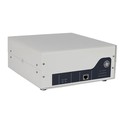
As a supplier of 6000W ultrasonic generators, I often encounter inquiries about the current output of these powerful devices. In this blog post, I will delve into the details of the current output of a 6000W ultrasonic generator, exploring its significance, factors affecting it, and how it relates to the overall performance of the generator.
Understanding the Basics of Ultrasonic Generators
Before we dive into the current output, let's briefly review what an ultrasonic generator is and how it works. An ultrasonic generator is an electronic device that converts electrical energy into high - frequency mechanical vibrations. These vibrations are then transmitted through a transducer, which transforms the electrical signals into ultrasonic waves. Ultrasonic generators are widely used in various industries, such as cleaning, welding, cutting, and sonochemistry, due to their ability to generate intense and precise ultrasonic energy.
The power rating of an ultrasonic generator, in this case, 6000W, indicates the amount of electrical power it can consume and convert into ultrasonic energy. However, the current output is a crucial parameter that determines how effectively the generator can deliver this power.
Calculating the Current Output
The current output of an ultrasonic generator can be calculated using Ohm's Law, which states that (I=\frac{P}{V}), where (I) is the current in amperes (A), (P) is the power in watts (W), and (V) is the voltage in volts (V). For a 6000W ultrasonic generator, the current output will depend on the operating voltage.
In most industrial applications, ultrasonic generators operate at a standard voltage of either 220V or 380V. Let's calculate the current output for both scenarios:
- At 220V: Using the formula (I = \frac{P}{V}), we substitute (P = 6000W) and (V=220V). So, (I=\frac{6000}{220}\approx 27.27A).
- At 380V: Substituting (P = 6000W) and (V = 380V) into the formula, we get (I=\frac{6000}{380}\approx 15.79A).
These calculations provide a theoretical estimate of the current output. In real - world applications, the actual current output may vary due to several factors.
Factors Affecting the Current Output
- Load Impedance: The load impedance of the ultrasonic system, which includes the transducer and the medium in which the ultrasonic waves are being applied, can significantly affect the current output. If the load impedance is too high, the generator may draw more current to maintain the desired power output. Conversely, a low load impedance may result in a lower current draw.
- Efficiency of the Generator: No ultrasonic generator is 100% efficient. Some of the electrical power is lost as heat during the conversion process. A less efficient generator will require a higher current input to achieve the rated power output.
- Operating Frequency: Ultrasonic generators can operate at different frequencies, typically ranging from 20kHz to 100kHz. The current output may vary depending on the operating frequency, as different frequencies may have different impedance characteristics.
- Power Regulation: Many modern ultrasonic generators are equipped with power regulation mechanisms to maintain a stable power output under varying load conditions. These mechanisms can adjust the current output to ensure consistent performance.
Importance of Current Output in Ultrasonic Applications
The current output of a 6000W ultrasonic generator plays a vital role in its performance and the effectiveness of the ultrasonic process.
- Transducer Performance: The current output determines the amount of electrical energy that is delivered to the transducer. A sufficient current is required to drive the transducer and generate the desired ultrasonic waves. If the current is too low, the transducer may not operate at its optimal level, resulting in reduced ultrasonic intensity.
- Process Efficiency: In applications such as ultrasonic cleaning or welding, the current output affects the efficiency of the process. A higher current output can lead to more intense ultrasonic waves, which can improve the cleaning or welding performance. However, it is essential to balance the current output to avoid overheating the system or causing damage to the components.
- System Safety: Monitoring the current output is crucial for ensuring the safety of the ultrasonic system. Excessive current can cause overheating, which may lead to component failure or even pose a fire hazard. By keeping the current output within the rated limits, the risk of system failure can be minimized.
Comparison with Other Power Ratings
As a supplier, we also offer ultrasonic generators with different power ratings, such as 4000W Ultrasonic Generator, 2000W Ultrasonic Generator, and 500W Ultrasonic Generator. The current output of these generators will be proportionally lower compared to the 6000W generator, based on their power ratings.
For example, a 4000W ultrasonic generator operating at 220V will have a current output of approximately (I=\frac{4000}{220}\approx 18.18A), while a 2000W generator at the same voltage will have a current output of about (I=\frac{2000}{220}\approx 9.09A), and a 500W generator will have a current output of (I=\frac{500}{220}\approx 2.27A).


Conclusion and Call to Action
In conclusion, the current output of a 6000W ultrasonic generator is a critical parameter that affects its performance, efficiency, and safety. By understanding the factors that influence the current output and its importance in ultrasonic applications, users can make informed decisions when selecting and operating these generators.
If you are in the market for a high - quality 6000W ultrasonic generator or any of our other power - rated ultrasonic generators, we invite you to contact us for a detailed discussion about your specific requirements. Our team of experts is ready to assist you in choosing the right generator for your application and provide you with the necessary technical support.
References
- Smith, J. (2018). Ultrasonic Technology: Principles and Applications. Publisher XYZ.
- Jones, A. (2019). Handbook of Ultrasonic Power Supplies. Publisher ABC.