In the realm of modern manufacturing, the pursuit of higher precision, better surface quality, and increased efficiency has led to the development and adoption of various advanced machining techniques. Among these, ultrasonic assisted turning has emerged as a promising method that offers significant performance improvements over traditional turning processes. As a supplier of ultrasonic assisted machining solutions, I am excited to delve into the details of how ultrasonic assistance can transform the turning process and bring about remarkable benefits.
Understanding Ultrasonic Assisted Turning
Before we explore the performance improvements, it's essential to understand what ultrasonic assisted turning is. Ultrasonic assisted turning is a hybrid machining process that combines traditional turning operations with high - frequency ultrasonic vibrations. In this process, an ultrasonic vibration system is integrated into the turning tool or the workpiece. The ultrasonic vibrations, typically in the range of 20 kHz to 40 kHz, are superimposed on the cutting motion. This results in a dynamic cutting process where the tool - workpiece interaction is significantly altered compared to conventional turning.
Performance Improvements in Ultrasonic Assisted Turning
1. Reduced Cutting Forces
One of the most significant advantages of ultrasonic assisted turning is the reduction in cutting forces. During conventional turning, the cutting tool experiences continuous contact with the workpiece, leading to high frictional forces and mechanical stresses. In ultrasonic assisted turning, the high - frequency vibrations cause the tool to periodically separate from the workpiece. This intermittent contact reduces the average frictional force between the tool and the workpiece.
Research has shown that cutting forces can be reduced by up to 50% or more in ultrasonic assisted turning compared to conventional turning. This reduction in cutting forces has several benefits. Firstly, it reduces the power consumption of the machining process, leading to energy savings. Secondly, it decreases the wear and tear on the cutting tool, extending its tool life. A longer tool life means less frequent tool changes, which in turn increases the overall productivity of the machining process.
2. Improved Surface Quality
Surface quality is a critical parameter in many machining applications. In conventional turning, the cutting process can leave behind surface defects such as chatter marks, tool marks, and rough surfaces. Ultrasonic assisted turning can significantly improve the surface quality of the machined parts.
The high - frequency vibrations help to break up chips more effectively, preventing them from getting stuck between the tool and the workpiece. This results in a smoother cutting process and reduces the occurrence of surface defects. Additionally, the intermittent contact between the tool and the workpiece reduces the thermal damage to the workpiece surface, leading to a better - finished surface. The surface roughness values can be reduced by an order of magnitude in ultrasonic assisted turning compared to conventional turning. This makes ultrasonic assisted turning ideal for applications where high - precision and high - quality surfaces are required, such as in the aerospace and medical industries.
3. Enhanced Chip Formation
Chip formation is an important aspect of the turning process. In conventional turning, long and continuous chips can be difficult to manage and can cause problems such as chip entanglement and surface damage. Ultrasonic assisted turning promotes the formation of short and discontinuous chips.
The high - frequency vibrations cause the chips to break up into smaller pieces, making them easier to remove from the cutting zone. This not only improves the chip evacuation process but also reduces the risk of chip - related problems. The improved chip formation also contributes to the overall stability of the cutting process, leading to better - controlled machining operations.
4. Increased Material Removal Rate
In some cases, ultrasonic assisted turning can also lead to an increased material removal rate. Although the cutting forces are reduced, the intermittent contact between the tool and the workpiece allows for higher cutting speeds and feeds without sacrificing the surface quality or tool life.
By increasing the cutting speed and feed rate, more material can be removed in a given time, thereby increasing the productivity of the machining process. This is particularly beneficial in mass - production applications where high material removal rates are required to meet production targets.
Our Ultrasonic Vibration Tables
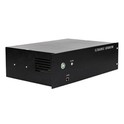
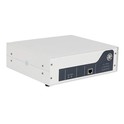
As a supplier of ultrasonic assisted machining solutions, we offer a range of high - quality ultrasonic vibration tables. Our ResoTab - P20 Ultrasonic Vibration Tables are designed to provide stable and precise ultrasonic vibrations for turning applications. These tables are equipped with advanced control systems that allow for easy adjustment of vibration parameters such as amplitude and frequency.
The ResoTab - F20A Ultrasonic Vibration Tables are another excellent option for ultrasonic assisted turning. They are known for their high - performance and reliability. These tables can be easily integrated into existing machining setups, making it convenient for manufacturers to upgrade their turning processes to ultrasonic assisted turning.
Our ResoTab - F20 Ultrasonic Vibration Tables offer a cost - effective solution for small - to - medium - scale manufacturers. They provide a good balance between performance and cost, making them an attractive option for those looking to enter the world of ultrasonic assisted machining.


Conclusion and Call to Action
In conclusion, ultrasonic assisted turning offers significant performance improvements over traditional turning processes. The reduction in cutting forces, improved surface quality, enhanced chip formation, and increased material removal rate make it a valuable technology for modern manufacturing.
If you are looking to improve the performance of your turning operations, we invite you to explore our range of ultrasonic vibration tables. Our team of experts is ready to assist you in selecting the right solution for your specific needs. Whether you are a large - scale manufacturer or a small - business owner, we can help you take advantage of the benefits of ultrasonic assisted turning. Contact us today to start a discussion about how our ultrasonic assisted machining solutions can transform your manufacturing processes.
References
- Dornfeld, D., Min, S., & Takeuchi, Y. (2008). Ultrasonic-assisted micromachining. CIRP Annals - Manufacturing Technology, 57(2), 521 - 542.
- Guo, C., & Liu, Z. (2011). A review of ultrasonic vibration - assisted machining in advanced materials. International Journal of Machine Tools and Manufacture, 51(1), 10 - 21.
- Huang, S., & Liang, S. Y. (2009). Modeling of ultrasonic - assisted cutting. Journal of Manufacturing Science and Engineering, 131(3), 031008.