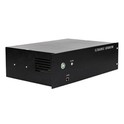
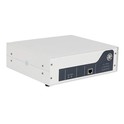
As a trusted supplier of ResoLab lab grade ultrasonicator, I am often asked about the power adjustment range of these high - performance devices. In this blog, I will delve into the details of the power adjustment capabilities of ResoLab lab grade ultrasonicator, exploring how it impacts various applications and why it is a crucial factor for laboratory professionals.
Understanding Ultrasonicator Power
Before we discuss the power adjustment range, it's essential to understand the role of power in an ultrasonicator. Ultrasonicators work by generating high - frequency sound waves that create cavitation bubbles in a liquid medium. These bubbles collapse, producing intense local forces such as high temperatures and pressures. The power of the ultrasonicator determines the intensity of these cavitation events.
Higher power generally leads to more vigorous cavitation, which can be beneficial for tasks that require rapid and efficient disruption, such as cell lysis, homogenization of tough samples, and degassing large volumes of liquid. On the other hand, lower power settings are suitable for more delicate applications where excessive force could damage the sample, like the dispersion of nanoparticles or the gentle mixing of sensitive biological materials.


Power Adjustment Range of ResoLab Lab Grade Ultrasonicator
ResoLab offers a range of lab grade ultrasonicators, each with its own power adjustment range tailored to different laboratory needs. Let's take a closer look at some of the popular models.
ResoLab - 500 Lab Grade Ultrasonicator
The ResoLab - 500 Lab Grade Ultrasonicator is a versatile device designed for small - to medium - scale laboratory applications. It has a power adjustment range from 20% to 100% of its maximum power output of 500 watts. This means that users can fine - tune the power according to the specific requirements of their experiment.
For example, when performing cell lysis on a small volume of cultured cells, a lower power setting, say 20% - 30%, may be sufficient to break open the cells without causing excessive heating, which could denature proteins. On the other hand, when homogenizing a thick tissue sample, a higher power setting of 80% - 100% can be used to ensure efficient disruption.
ResoLab - 1000 Lab Grade Ultrasonicator
The ResoLab - 1000 Lab Grade Ultrasonicator is a step up in terms of power and capacity. It offers a power adjustment range from 10% to 100% of its 1000 - watt maximum power. The wider range of adjustment provides even greater flexibility for a broader range of applications.
In applications such as the dispersion of carbon nanotubes, where a gentle yet consistent power input is required to prevent aggregation, a lower power setting around 10% - 20% can be used. When dealing with large - scale degassing of industrial samples or the disruption of highly resistant microbial cells, the higher power settings of 80% - 100% can be employed.
ResoLab - 2000 Lab Grade Ultrasonicator
The ResoLab - 2000 Lab Grade Ultrasonicator is a high - end device suitable for demanding laboratory and industrial applications. It has a power adjustment range from 5% to 100% of its 2000 - watt maximum power. This extremely wide range allows for extremely precise control of the ultrasonic power.
In research involving the synthesis of advanced materials, where precise control of the reaction conditions is crucial, the low - power settings (5% - 10%) can be used to initiate the reaction gently. For large - scale processing in the food or pharmaceutical industries, such as the emulsification of large batches of oils and water, the high - power settings can be utilized to achieve rapid and efficient results.
Importance of Power Adjustment in Laboratory Applications
The ability to adjust the power of an ultrasonicator is of utmost importance in various laboratory applications.
Sample Integrity
In biological research, maintaining the integrity of samples is crucial. For instance, when working with proteins or nucleic acids, excessive power can lead to denaturation or degradation. By using the appropriate low - power setting, researchers can ensure that the biological molecules remain intact while still achieving the desired level of disruption or mixing.
Efficiency
For applications like cell lysis or sample homogenization, using the right power setting can significantly improve efficiency. If the power is too low, the process may take an unreasonably long time, while too high a power can lead to over - processing and waste of energy. By adjusting the power to the optimal level, laboratories can save time and resources.
Adaptability
Different samples require different levels of ultrasonic power. A single - power - setting ultrasonicator may not be suitable for a wide range of applications. The power adjustment feature of ResoLab ultrasonicators allows laboratories to use the same device for multiple tasks, increasing the versatility of the equipment and reducing the need for multiple specialized devices.
How to Choose the Right Power Adjustment for Your Application
Choosing the right power adjustment for your application depends on several factors.
Sample Type
The nature of the sample is the most important factor. Soft and delicate samples, such as cultured cells or plant tissues, usually require lower power settings. In contrast, tough samples like muscle tissue or certain polymers may need higher power for effective disruption.
Volume of the Sample
Larger volumes of samples generally require higher power to ensure uniform treatment. For small - volume samples, lower power settings can be sufficient and may be more energy - efficient.
Desired Outcome
If the goal is to simply mix two liquids gently, a low - power setting is appropriate. However, if the aim is to completely break down a sample into its components, a higher power setting may be necessary.
Conclusion
The power adjustment range of ResoLab lab grade ultrasonicators is a key feature that makes them suitable for a wide variety of laboratory applications. Whether you are working on small - scale research projects or large - scale industrial processes, the ability to fine - tune the power allows for precise control, ensuring the best results while protecting the integrity of your samples.
If you are interested in learning more about our ResoLab lab grade ultrasonicators or are considering a purchase, we invite you to reach out for a detailed discussion. Our team of experts is ready to assist you in selecting the right model and power settings for your specific laboratory needs.
References
- "Ultrasonics in Analytical Chemistry" by P. Mason and J. Lorimer.
- "Biological Applications of Ultrasonics" edited by A. C. Hendry.
- Technical documentation provided by ResoLab for its lab grade ultrasonicators.