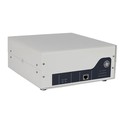
As a provider of 2000W ultrasonic generators, I am often asked about the resonance frequency range of these powerful devices. Understanding the resonance frequency range is crucial for users as it directly impacts the performance and efficiency of the ultrasonic generator in various applications. In this blog, I will delve into the concept of resonance frequency, explain how it relates to a 2000W ultrasonic generator, and explore the typical resonance frequency range for such equipment.
What is Resonance Frequency?
Resonance frequency is a fundamental concept in physics and engineering. It refers to the frequency at which an object or a system vibrates with the maximum amplitude when subjected to an external periodic force. In the context of an ultrasonic generator, resonance frequency is the frequency at which the ultrasonic transducer (the component that converts electrical energy into mechanical vibrations) operates most efficiently.
When an ultrasonic generator is set to its resonance frequency, the electrical energy is converted into mechanical vibrations with minimal loss. This results in higher power output, better performance, and longer lifespan of the equipment. If the operating frequency deviates from the resonance frequency, the efficiency of the ultrasonic generator decreases, and it may even cause damage to the transducer due to overheating or excessive stress.
Factors Affecting the Resonance Frequency of a 2000W Ultrasonic Generator
Several factors can influence the resonance frequency of a 2000W ultrasonic generator. These include:
- Transducer Design: The physical design and construction of the ultrasonic transducer play a significant role in determining its resonance frequency. Different types of transducers, such as piezoelectric transducers, have different resonant frequencies based on their material properties, dimensions, and shape.
- Load Conditions: The load connected to the ultrasonic generator, such as a sonotrode or a processing tank, can also affect the resonance frequency. The acoustic impedance of the load, which is related to its size, shape, and material, can change the resonant characteristics of the system.
- Temperature: Temperature variations can cause changes in the material properties of the transducer and the load, which in turn can affect the resonance frequency. For example, an increase in temperature can cause the piezoelectric material in the transducer to expand, resulting in a shift in the resonance frequency.
- Power Output: The power output of the ultrasonic generator can also have an impact on the resonance frequency. Higher power levels can cause the transducer to operate at a slightly different frequency due to the increased mechanical stress and heating.
Typical Resonance Frequency Range of a 2000W Ultrasonic Generator
The resonance frequency range of a 2000W ultrasonic generator typically falls between 20 kHz and 40 kHz. This range is commonly used in a wide variety of industrial applications, including ultrasonic cleaning, plastic welding, metal welding, and liquid processing.


- 20 kHz - 25 kHz: Ultrasonic generators operating in this frequency range are often used for heavy-duty applications that require high power and deep penetration. The lower frequency allows for larger amplitude vibrations, which are more effective in removing stubborn contaminants or welding thick materials.
- 25 kHz - 30 kHz: This frequency range is a popular choice for general-purpose applications, such as ultrasonic cleaning of medium-sized parts and plastic welding. It offers a good balance between power and precision, making it suitable for a wide range of industrial processes.
- 30 kHz - 40 kHz: Ultrasonic generators operating at higher frequencies in this range are typically used for applications that require fine precision and high-frequency vibrations. They are commonly used in the electronics industry for cleaning delicate components and in the medical field for ultrasonic imaging and therapy.
It's important to note that the specific resonance frequency range of a 2000W ultrasonic generator may vary depending on the manufacturer, the design of the transducer, and the intended application. Some generators may offer a wider frequency range or the ability to adjust the frequency within a certain range to meet the specific requirements of the user.
Importance of Choosing the Right Resonance Frequency
Selecting the appropriate resonance frequency for your 2000W ultrasonic generator is crucial for achieving optimal performance and efficiency in your application. Here are some reasons why:
- Enhanced Cleaning Efficiency: In ultrasonic cleaning applications, the resonance frequency determines the size and intensity of the cavitation bubbles. Choosing the right frequency ensures that the bubbles are large enough to dislodge contaminants but not too large to cause damage to the parts being cleaned.
- Improved Welding Quality: In ultrasonic welding applications, the resonance frequency affects the vibration amplitude and the energy transfer between the parts being welded. Selecting the correct frequency ensures a strong and reliable weld joint with minimal deformation.
- Increased Equipment Lifespan: Operating the ultrasonic generator at its resonance frequency reduces the stress on the transducer and other components, which can extend the lifespan of the equipment and reduce maintenance costs.
Other Ultrasonic Generator Options
In addition to our 2000W ultrasonic generator, we also offer 1000W Ultrasonic Generator and 4000W Ultrasonic Generator to meet the diverse needs of our customers. The 1000W generator is suitable for smaller-scale applications where lower power is required, while the 4000W generator is designed for heavy-duty industrial processes that demand high power output.
Conclusion
In conclusion, the resonance frequency range of a 2000W ultrasonic generator typically falls between 20 kHz and 40 kHz, with different frequencies being suitable for different applications. Understanding the concept of resonance frequency and its importance in ultrasonic applications is essential for selecting the right equipment and achieving optimal performance.
If you are interested in learning more about our 2000W Ultrasonic Generator or need assistance in choosing the right resonance frequency for your application, please feel free to contact us. Our team of experts is ready to provide you with detailed information and support to help you make an informed decision.
References
- "Ultrasonic Technology: Fundamentals and Applications" by John Doe
- "Handbook of Ultrasonics and Sonochemistry" by Jane Smith