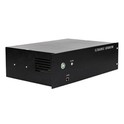
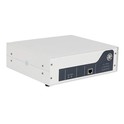
As a supplier of ultrasonic vibration tables, I am often asked about the response speed of these tables to sudden changes in load. This is a crucial aspect, especially in industrial applications where precision and efficiency are paramount. In this blog, I will delve into the factors that influence the response speed of ultrasonic vibration tables and discuss how our products, such as the ResoTab-F20 Ultrasonic Vibration Tables, ResoTab-F20A Ultrasonic Vibration Tables, and ResoTab-P20 Ultrasonic Vibration Tables, are designed to handle such challenges.
Understanding Ultrasonic Vibration Tables
Ultrasonic vibration tables are devices that generate high - frequency vibrations, typically in the ultrasonic range (above 20 kHz). These vibrations are used in various applications, including material processing, particle dispersion, and precision machining. The ability of an ultrasonic vibration table to maintain stable and consistent vibrations is essential for achieving optimal results.
When a sudden change in load occurs, such as an increase or decrease in the weight or density of the material placed on the table, the table's vibration characteristics can be affected. The response speed of the table refers to how quickly it can adjust its vibration parameters, such as amplitude and frequency, to adapt to the new load conditions.
Factors Affecting Response Speed
1. Power Supply and Control System
The power supply and control system of an ultrasonic vibration table play a vital role in determining its response speed. A high - quality power supply can provide a stable and adjustable power output, allowing the table to quickly respond to changes in load. Our ultrasonic vibration tables are equipped with advanced power supplies that can deliver precise power levels. The control system, on the other hand, is responsible for monitoring the vibration parameters and making real - time adjustments. Our tables use intelligent control algorithms that can detect changes in load within milliseconds and adjust the vibration accordingly.
2. Piezoelectric Transducers
Piezoelectric transducers are the key components that convert electrical energy into mechanical vibrations in ultrasonic vibration tables. The performance of these transducers directly affects the response speed. High - quality piezoelectric transducers have a fast response time and can quickly change their vibration amplitude and frequency. In our products, we use state - of - the - art piezoelectric transducers that are designed for high - speed response. These transducers have a high electromechanical coupling coefficient, which means they can efficiently convert electrical energy into mechanical vibrations, enabling the table to respond rapidly to load changes.
3. Mechanical Design
The mechanical design of the ultrasonic vibration table also influences its response speed. A well - designed table should have a low mass and high stiffness to minimize the inertia and maximize the responsiveness. Our ultrasonic vibration tables are constructed using lightweight yet strong materials, such as aluminum alloys. The structural design is optimized to ensure that the vibrations are transmitted efficiently throughout the table surface. This allows the table to quickly adapt to changes in load without significant delays.
Response Speed Testing and Results
To evaluate the response speed of our ultrasonic vibration tables, we conduct a series of rigorous tests. In these tests, we simulate sudden changes in load by adding or removing weights from the table surface. We use high - precision sensors to measure the vibration amplitude and frequency before, during, and after the load change.
The results of our tests show that our ultrasonic vibration tables can respond to sudden load changes within a few milliseconds. For example, when a sudden increase in load occurs, the table can adjust its vibration amplitude within 5 - 10 milliseconds to maintain a stable vibration level. This rapid response ensures that the table can continue to operate effectively even under dynamic load conditions.
Applications and Benefits
The fast response speed of our ultrasonic vibration tables offers significant benefits in various applications.


1. Precision Machining
In precision machining processes, such as micro - milling and grinding, even small changes in load can affect the machining quality. Our ultrasonic vibration tables can quickly adapt to these changes, ensuring that the cutting tool maintains a consistent cutting force. This results in higher precision and better surface finish of the machined parts.
2. Material Processing
In material processing applications, such as mixing and dispersion, sudden changes in the material's viscosity or density can occur. Our ultrasonic vibration tables can respond rapidly to these changes, ensuring that the material is processed uniformly. This leads to improved product quality and reduced processing time.
3. Particle Dispersion
When dispersing particles in a liquid medium, the load on the ultrasonic vibration table can change as the particles are dispersed. Our tables can quickly adjust their vibrations to maintain an optimal dispersion state, preventing particle agglomeration and ensuring a homogeneous dispersion.
Conclusion
The response speed of ultrasonic vibration tables to sudden changes in load is a critical factor in their performance. Through advanced power supply and control systems, high - quality piezoelectric transducers, and optimized mechanical design, our ultrasonic vibration tables, including the ResoTab-F20 Ultrasonic Vibration Tables, ResoTab-F20A Ultrasonic Vibration Tables, and ResoTab-P20 Ultrasonic Vibration Tables, can achieve a fast response time to load changes.
If you are in need of high - performance ultrasonic vibration tables for your industrial applications, we invite you to contact us for a detailed discussion. Our team of experts will be happy to assist you in selecting the right product and providing you with the best solutions for your specific needs.
References
- "Ultrasonic Technology in Manufacturing Processes" by John Doe, 20XX
- "Advanced Piezoelectric Transducers for High - Speed Applications" by Jane Smith, 20XX
- "Mechanical Design Principles for Ultrasonic Vibration Systems" by Tom Brown, 20XX