Hey there! As a supplier of 500w ultrasonic generators, I've gotten tons of questions about how concentration affects the homogenization process. So, I thought I'd sit down and share my thoughts on this topic.
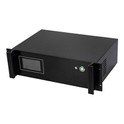
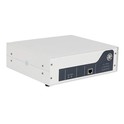
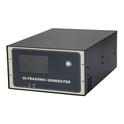
First off, let's talk a bit about what an ultrasonic generator does. An ultrasonic generator, like our 500w one, produces high - frequency electrical energy that is then converted into mechanical vibrations by a transducer. These vibrations create cavitation in a liquid medium. Cavitation is the formation, growth, and implosive collapse of tiny bubbles in the liquid. When these bubbles collapse, they generate intense local heat, high pressure, and strong shear forces, which are used for homogenization.
Now, onto the main question: how does concentration affect the homogenization of a 500w ultrasonic generator?
Low Concentration
When the concentration of the sample in the liquid medium is low, homogenization is generally easier. At low concentrations, there are fewer particles or substances to break down and disperse. The ultrasonic waves can travel more freely through the liquid, and the cavitation bubbles have more space to form and collapse.
For example, if you're trying to homogenize a solution with a low concentration of a fine powder, the 500w ultrasonic generator can quickly break up any small agglomerates that might be present. The shear forces generated by the collapsing cavitation bubbles are more effective in separating individual particles and distributing them evenly throughout the liquid.
However, it's important to note that even at low concentrations, the homogenization process might not be instantaneous. You still need to run the ultrasonic generator for an appropriate amount of time to ensure thorough homogenization. And sometimes, if the particles are very small and have a high affinity for each other, they might start to re - agglomerate over time, even after homogenization.
High Concentration
On the other hand, high - concentration samples present a different set of challenges. When there are a large number of particles or substances in the liquid, the ultrasonic waves have a harder time traveling through the medium. The particles can absorb and scatter the ultrasonic energy, reducing the efficiency of the cavitation process.
In a highly concentrated sample, the cavitation bubbles might not be able to form as easily or grow to their optimal size. The close proximity of the particles can also cause the cavitation bubbles to collapse prematurely or in an irregular manner. This can lead to uneven homogenization, where some areas of the sample are well - homogenized while others still have large agglomerates.
For instance, if you're trying to homogenize a thick paste or a highly concentrated suspension, you might find that the 500w ultrasonic generator struggles to break down all the particles. The high viscosity of the medium can also slow down the movement of the cavitation bubbles, further reducing the effectiveness of the homogenization process.
Adjusting the Process for Different Concentrations
So, how can you deal with different concentrations when using a 500w ultrasonic generator?
For low - concentration samples, you can usually use the generator at its standard settings. However, you might want to run it for a shorter period of time to avoid over - processing. You can also use a lower power setting if the sample is very delicate and prone to damage from the intense shear forces.
When dealing with high - concentration samples, you might need to make some adjustments. One option is to increase the processing time. Running the ultrasonic generator for a longer period can give it more time to break down the particles and achieve better homogenization. You can also try diluting the sample to a more manageable concentration before homogenization. This will allow the ultrasonic waves to travel more freely through the liquid and improve the cavitation process.
Another approach is to use a more powerful ultrasonic generator. We also offer 4000W Ultrasonic Generator, 2000W Ultrasonic Generator, and 3000W Ultrasonic Generator. A higher - power generator can provide more energy to overcome the challenges posed by high - concentration samples. It can generate stronger cavitation bubbles and more intense shear forces, which are better suited for breaking down large agglomerates and dispersing a large number of particles.
Other Factors Affecting Homogenization
It's not just concentration that affects the homogenization process. Temperature can also play a role. Higher temperatures can reduce the viscosity of the liquid, making it easier for the ultrasonic waves to travel through and for the cavitation bubbles to form. However, if the temperature is too high, it can damage the sample or cause the ultrasonic generator to overheat.
The type of sample also matters. Some substances are more difficult to homogenize than others. For example, samples with long - chain polymers or complex molecular structures might require more energy and time to break down and disperse evenly.


Conclusion
In conclusion, concentration has a significant impact on the homogenization of a 500w ultrasonic generator. Low - concentration samples are generally easier to homogenize, while high - concentration samples pose more challenges. By understanding these effects and making appropriate adjustments to the homogenization process, you can achieve better results.
If you're in the market for an ultrasonic generator for your homogenization needs, whether it's our 500w model or a more powerful one, feel free to reach out. We're here to help you choose the right equipment and provide you with all the support you need for successful homogenization.
References
- Mason, T. J. (1990). Sonochemistry: The Uses of Ultrasound in Chemistry. The Royal Society of Chemistry.
- Povey, M. J. W. (1997). Ultrasonic Techniques for Liquid Foods and Beverages. Blackwell Science.