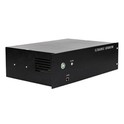
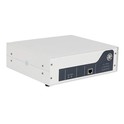
Hey there, fellow lab enthusiasts! As a supplier of ResoLab lab grade ultrasonicators, I've seen firsthand how crucial it is to pick the right probe for your machine. In this blog, I'm gonna break down the key factors you need to consider when making this important decision.


First off, let's talk about what an ultrasonicator does. Ultrasonication is a process that uses high - frequency sound waves to disrupt cells, mix solutions, and perform a whole bunch of other cool lab tasks. The probe is the part of the ultrasonicator that actually delivers those sound waves into your sample. So, getting the right one is super important for getting accurate and consistent results.
1. Power Requirements
The power of the probe you choose has to match the power output of your ultrasonicator. Our ResoLab ultrasonicators come in different power levels, like the ResoLab - 500 Lab Grade Ultrasonicator with a relatively lower power, the ResoLab - 1000 Lab Grade Ultrasonicator with a mid - range power, and the ResoLab - 2000 Lab Grade Ultrasonicator with a higher power.
If you use a probe that requires more power than your ultrasonicator can provide, it won't work properly. The probe might not be able to generate the necessary sound waves, and you won't get the results you're looking for. On the other hand, if you use a probe that needs less power than your ultrasonicator can give, you're not using the machine to its full potential, and you might end up wasting energy.
2. Sample Volume
The volume of your sample is another major factor. For small - volume samples, say less than 10 mL, you'll want a small - diameter probe. These probes can focus the ultrasonic energy more precisely on the sample, which is great for small amounts. They prevent the energy from being dissipated in a large volume of liquid, ensuring that your sample gets the full effect of the ultrasonication.
For larger sample volumes, like 50 mL or more, a larger - diameter probe is the way to go. A bigger probe can cover a larger area and distribute the ultrasonic energy more evenly throughout the sample. If you try to use a small probe for a large sample, it might take forever to process the whole thing, and you might not get uniform results.
3. Sample Viscosity
Viscosity is how thick or thin a liquid is. If you're working with a low - viscosity sample, like water or a thin buffer solution, most probes will work just fine. But if you're dealing with a high - viscosity sample, such as a thick polymer solution or a cell suspension with a lot of debris, you need a probe that can handle it.
High - viscosity samples require more energy to disrupt. So, you'll probably need a more powerful probe and maybe a larger - diameter one too. The larger diameter helps to push through the thick sample and distribute the energy more effectively.
4. Probe Material
The material of the probe matters a lot, especially when it comes to chemical compatibility. Most probes are made of titanium because it's strong, durable, and can withstand the high - intensity ultrasonic waves. But if your sample contains certain chemicals that can react with titanium, you'll need to look for a different material.
Some probes are coated with materials like PTFE (Teflon) to make them more chemically resistant. This is useful when working with acidic or basic solutions that might corrode a regular titanium probe. Make sure to check the chemical compatibility of the probe material with your sample before making a purchase.
5. Probe Tip Design
The design of the probe tip can also affect its performance. There are different types of probe tips, such as flat tips, pointed tips, and stepped tips.
Flat tips are great for general - purpose applications. They provide a wide area of ultrasonic energy distribution, which is good for mixing and homogenizing large - volume samples. Pointed tips, on the other hand, concentrate the energy at a single point. This is useful for tasks like cell disruption, where you need to break open cells precisely. Stepped tips are a combination of both. They can be adjusted to different diameters, giving you more flexibility in terms of sample volume and the type of processing you need to do.
6. Sterilization Requirements
In many lab settings, especially in biological and medical research, sterilization is a must. You need to make sure that the probe can be easily sterilized between uses to prevent cross - contamination.
Some probes can be autoclaved, which is a common method of sterilization using high - pressure steam. Others can be sterilized using chemical disinfectants. When choosing a probe, consider how easy it will be to keep it clean and sterile according to your lab's requirements.
7. Cost
Let's face it, cost is always a factor. Probes can vary in price depending on their size, material, and features. While you don't want to skimp on quality, you also don't want to overspend.
Think about your budget and what you really need from the probe. If you only need a probe for occasional, simple tasks, you might not need to buy the most expensive, high - end one. But if you're doing complex, high - volume research, investing in a good - quality probe is definitely worth it in the long run.
Conclusion
Choosing the right probe for your ResoLab lab grade ultrasonicator is a multi - faceted decision. You need to consider power requirements, sample volume, viscosity, probe material, tip design, sterilization needs, and cost. By taking all these factors into account, you can ensure that you get the most out of your ultrasonicator and achieve the best results in your lab work.
If you're still not sure which probe is right for you, don't hesitate to reach out. We're here to help you make the best choice for your specific needs. Whether you're a small research lab or a large - scale industrial facility, we've got the expertise and the products to support you. Contact us to start a discussion about your probe requirements and let's get your lab running at its best!
References
- Ultrasonics in Analytical Chemistry. Edited by G. O. Phillips, B. J. McCarry.
- Principles of Ultrasonics for Laboratory Use. Published by Branson Ultrasonics Corporation.