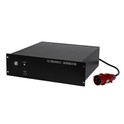
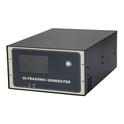
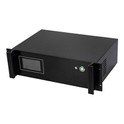
In the world of laboratory equipment, ultrasonicators play a crucial role in a wide range of applications, from sample preparation to cell disruption and more. One of the standout products in this field is the ResoLab - 1000 Lab Grade Ultrasonicator. As a proud supplier of this remarkable device, I am here to delve into the frequency range of the ResoLab - 1000 and explore its significance in laboratory settings.
Understanding Ultrasonication and Frequency
Before we dive into the specific frequency range of the ResoLab - 1000, it's important to understand the concept of ultrasonication and the role of frequency. Ultrasonication is a process that uses high - frequency sound waves to create cavitation in a liquid medium. Cavitation refers to the formation, growth, and implosive collapse of tiny gas bubbles in the liquid. When these bubbles collapse, they generate intense local forces, such as high pressures and temperatures, which can be used for various purposes in the laboratory.
The frequency of the ultrasonic waves is a critical parameter. Different frequencies have different effects on the sample and the cavitation process. Lower frequencies generally produce larger and more powerful cavitation bubbles, which are suitable for applications like cell disruption and homogenization. Higher frequencies, on the other hand, create smaller bubbles that are more suitable for delicate tasks such as sonochemistry and particle dispersion.
Frequency Range of the ResoLab - 1000 Lab Grade Ultrasonicator
The ResoLab - 1000 Lab Grade Ultrasonicator is designed with a frequency range that offers a balance between power and precision. Its frequency range typically spans from 20 kHz to 40 kHz. This range is carefully selected to meet the diverse needs of laboratory applications.
At the lower end of the range, around 20 kHz, the ResoLab - 1000 can generate large and energetic cavitation bubbles. This makes it highly effective for tasks such as breaking down cell walls in biological samples. For example, in microbiology research, scientists often need to extract intracellular components from bacteria or yeast cells. The 20 kHz frequency of the ResoLab - 1000 can provide the necessary force to disrupt these cells, releasing proteins, DNA, and other biomolecules for further analysis.
As the frequency increases towards 40 kHz, the cavitation bubbles become smaller and more numerous. This is beneficial for applications where a gentler approach is required. In sonochemistry, for instance, chemical reactions can be accelerated by the high - energy environment created by cavitation. The 40 kHz frequency allows for a more controlled and efficient reaction environment, minimizing unwanted side reactions and ensuring better yields.
Advantages of the ResoLab - 1000's Frequency Range
The 20 - 40 kHz frequency range of the ResoLab - 1000 offers several advantages over other ultrasonicators in the market.
Versatility
One of the key advantages is its versatility. With this frequency range, the ResoLab - 1000 can be used for a wide variety of applications. Whether you are working on biological samples, chemical reactions, or materials science research, this ultrasonicator can meet your needs. For example, in materials science, the device can be used to disperse nanoparticles in a liquid medium. The ability to adjust the frequency allows researchers to optimize the dispersion process based on the size and properties of the nanoparticles.
Precision
The frequency range also provides a high level of precision. Laboratory experiments often require careful control of the ultrasonic conditions to ensure reproducible results. The ResoLab - 1000 allows users to fine - tune the frequency within the 20 - 40 kHz range, enabling them to achieve the exact cavitation effects needed for their specific application. This precision is especially important in applications such as drug delivery research, where the size and stability of drug carriers need to be carefully controlled.
Energy Efficiency
Another advantage is energy efficiency. The ResoLab - 1000 is designed to operate efficiently within its frequency range. By generating the right amount of cavitation at the appropriate frequency, it minimizes energy waste. This not only reduces operating costs but also extends the lifespan of the device.
Comparison with Other ResoLab Ultrasonicators
In our product lineup, the ResoLab - 1000 is not the only lab - grade ultrasonicator. We also offer the ResoLab - 500 Lab Grade Ultrasonicator and the ResoLab - 2000 Lab Grade Ultrasonicator.
The ResoLab - 500 is a more compact and cost - effective option. It has a slightly different frequency range, typically from 25 kHz to 35 kHz. This range is well - suited for smaller - scale applications and tasks that require a relatively lower power output. For example, it can be used in educational laboratories for basic experiments in sonochemistry or sample preparation.
The ResoLab - 2000, on the other hand, is a high - power ultrasonicator. It has a wider frequency range, from 18 kHz to 42 kHz. This makes it suitable for large - scale industrial applications or research projects that require high - intensity ultrasonication. For example, in the food industry, the ResoLab - 2000 can be used for the homogenization of large volumes of milk or fruit juices.
Applications of the ResoLab - 1000 in Different Industries
The ResoLab - 1000's frequency range makes it a valuable tool in various industries.
Biotechnology
In the biotechnology industry, the ResoLab - 1000 is used for cell lysis, protein extraction, and DNA shearing. The 20 kHz frequency can effectively break down the tough cell walls of bacteria and mammalian cells, releasing the intracellular contents for further analysis. This is crucial for applications such as gene therapy research and the production of recombinant proteins.


Chemistry
In the field of chemistry, the ResoLab - 1000 is used for sonochemical reactions, such as the synthesis of nanoparticles and the acceleration of chemical reactions. The 40 kHz frequency provides a gentle yet effective way to initiate and control these reactions, improving reaction rates and yields.
Materials Science
In materials science, the ResoLab - 1000 is used for the dispersion of nanoparticles, the exfoliation of layered materials, and the surface modification of materials. The ability to adjust the frequency allows researchers to optimize the processing conditions for different materials, improving their properties and performance.
Conclusion
The ResoLab - 1000 Lab Grade Ultrasonicator, with its frequency range of 20 kHz to 40 kHz, is a versatile and powerful tool for laboratory applications. Its ability to generate controlled cavitation at different frequencies provides researchers with the precision and flexibility they need to achieve their research goals. Whether you are in the fields of biotechnology, chemistry, or materials science, this ultrasonicator can be a valuable addition to your laboratory.
If you are interested in learning more about the ResoLab - 1000 or are considering purchasing one for your laboratory, we encourage you to contact us for a detailed discussion. Our team of experts is ready to assist you in selecting the right ultrasonicator for your specific needs and to provide you with comprehensive technical support.
References
- Mason, T. J. (2007). Sonochemistry: the use of ultrasound in chemistry. Royal Society of Chemistry.
- Suslick, K. S. (1990). Sonochemistry. Science, 247(4940), 1439 - 1445.
- Cintas, P. (1995). Sonochemistry in organic synthesis. Tetrahedron, 51(37), 9717 - 9760.