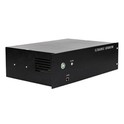
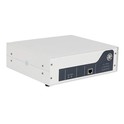
When it comes to laboratory equipment, the ResoLab-1000 Lab Grade Ultrasonicator stands out as a remarkable tool. As a supplier of the ResoLab-1000 Lab Grade Ultrasonicator, I am often asked about its power output. In this blog post, I will delve into the details of the power output of this ultrasonicator and explain why it is a crucial factor in laboratory applications.
Understanding Ultrasonication and Power Output
Ultrasonication is a process that uses high - frequency sound waves to create cavitation in a liquid medium. Cavitation refers to the formation, growth, and collapse of tiny bubbles in the liquid. When these bubbles collapse, they generate intense local heat, high pressures, and strong shear forces. These physical effects can be used for a variety of laboratory tasks such as cell disruption, sample homogenization, particle dispersion, and sonochemistry.
The power output of an ultrasonicator is a measure of the energy it can deliver to the sample. It is typically expressed in watts (W). A higher power output generally means that the ultrasonicator can generate more intense cavitation, which can lead to faster and more efficient processing of the sample. However, the optimal power output depends on the specific application, the volume of the sample, and the properties of the sample itself.
Power Output of the ResoLab - 1000 Lab Grade Ultrasonicator
The ResoLab-1000 Lab Grade Ultrasonicator is designed to provide a reliable and adjustable power output. It has a maximum power output of 1000 watts, which makes it suitable for a wide range of laboratory applications. The ability to adjust the power output is a significant advantage as it allows users to fine - tune the ultrasonication process according to their specific needs.
For small - volume samples, a lower power output may be sufficient. For example, when working with a few milliliters of a sensitive biological sample, a power output of 100 - 200 watts might be appropriate to avoid over - heating and damage to the sample. On the other hand, for larger - volume samples or more challenging tasks such as breaking down tough cell walls or dispersing highly agglomerated particles, a higher power output can be used. The ResoLab-1000 allows users to gradually increase the power from a low level up to its maximum of 1000 watts, providing flexibility in the ultrasonication process.
Factors Affecting the Effective Power Output
While the ResoLab-1000 has a maximum power output of 1000 watts, the effective power delivered to the sample can be affected by several factors.
Probe Size and Design: The probe, also known as the horn, is the part of the ultrasonicator that comes into direct contact with the sample. Different probe sizes and designs can affect the power transfer efficiency. A larger probe may be able to transfer more power to a larger volume of the sample, but it may also require more power to operate effectively. The ResoLab-1000 is compatible with a variety of probe sizes, allowing users to choose the most suitable one for their application.
Sample Properties: The physical and chemical properties of the sample can also influence the power requirements. For instance, a highly viscous sample may require more power to generate cavitation compared to a low - viscosity sample. Similarly, samples with a high solid content or those that tend to form aggregates may need a higher power output for effective processing.
Temperature: Temperature can have an impact on the cavitation process and thus the power requirements. As the temperature of the sample increases, the vapor pressure of the liquid also increases, which can reduce the intensity of cavitation. Therefore, in some cases, it may be necessary to cool the sample during ultrasonication to maintain an optimal power - to - cavitation ratio.
Comparison with Other ResoLab Ultrasonicators
In addition to the ResoLab-1000, our product line also includes the ResoLab-2000 Lab Grade Ultrasonicator and the ResoLab-500 Lab Grade Ultrasonicator. The ResoLab-2000 has a higher maximum power output of 2000 watts, which makes it suitable for large - scale industrial applications or very challenging laboratory tasks. The ResoLab-500, on the other hand, has a maximum power output of 500 watts, making it a good choice for small - scale laboratories or applications where a lower power is sufficient.
The ResoLab-1000 offers a balance between power and flexibility. It can handle a wide range of sample volumes and applications, making it a popular choice among researchers and laboratory technicians. Whether you are working on a small - scale research project or a medium - scale production process, the ResoLab-1000 can provide the necessary power output.
Benefits of the ResoLab - 1000's Power Output
The adjustable power output of the ResoLab-1000 brings several benefits to laboratory users.


Versatility: The ability to adjust the power output allows the ResoLab-1000 to be used for multiple applications. It can be used for gentle sample preparation tasks as well as more aggressive processing operations. This versatility makes it a cost - effective investment for laboratories that need to perform different types of ultrasonication.
Energy Efficiency: By being able to set the power output according to the specific requirements of the sample, users can avoid using excessive energy. This not only reduces operating costs but also helps to minimize heat generation, which can be beneficial for heat - sensitive samples.
Precision: Precise control over the power output enables users to achieve more consistent results. This is particularly important in research and quality control applications where reproducibility is crucial.
Conclusion
The power output of the ResoLab-1000 Lab Grade Ultrasonicator is a key feature that contributes to its effectiveness and versatility in laboratory applications. With a maximum power output of 1000 watts and adjustable settings, it can meet the needs of a wide range of users. Whether you are involved in academic research, pharmaceutical development, or industrial production, the ResoLab-1000 can be a valuable addition to your laboratory equipment.
If you are interested in learning more about the ResoLab-1000 Lab Grade Ultrasonicator or are considering a purchase, please feel free to visit our product page or contact us for further information. Our team of experts is ready to assist you in choosing the right ultrasonicator for your specific needs and to provide support throughout the purchasing process.
References
- Mason, T. J. (2007). Practical Sonochemistry: Using Ultrasound in Chemistry. Royal Society of Chemistry.
- Suslick, K. S. (1990). Sonochemistry. Science, 247(4941), 1439 - 1445.
- Tiwari, B. K., & Mason, T. J. (2014). Applications of Power Ultrasound in Food Processing. Academic Press.