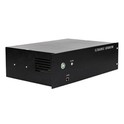
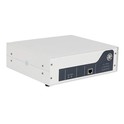
What is the ultrasonic intensity of the ResoLab - 1000 Lab Grade Ultrasonicator?
As a supplier of the ResoLab - 1000 Lab Grade Ultrasonicator, I am often asked about the ultrasonic intensity of this remarkable piece of equipment. In this blog post, I will delve into the concept of ultrasonic intensity, explain how it relates to the ResoLab - 1000, and discuss its significance in various laboratory applications.


Understanding Ultrasonic Intensity
Ultrasonic intensity refers to the amount of energy carried by an ultrasonic wave per unit area per unit time. It is typically measured in watts per square centimeter (W/cm²). The intensity of an ultrasonic wave is a crucial parameter as it directly influences the physical and chemical effects that can be achieved through ultrasonication.
Higher ultrasonic intensities generally lead to more pronounced effects such as cavitation, which is the formation, growth, and implosive collapse of bubbles in a liquid medium. Cavitation is responsible for many of the useful applications of ultrasonication, including cell disruption, emulsification, and sonochemistry.
Ultrasonic Intensity of the ResoLab - 1000
The ResoLab - 1000 Lab Grade Ultrasonicator is designed to provide a high - level of ultrasonic intensity to meet the demanding requirements of laboratory research and development. This instrument can generate ultrasonic intensities in the range that is suitable for a wide variety of applications.
The specific ultrasonic intensity of the ResoLab - 1000 can vary depending on several factors, including the power setting, the type of probe used, and the characteristics of the sample being processed. The ResoLab - 1000 offers adjustable power settings, allowing users to fine - tune the ultrasonic intensity according to their specific needs.
For example, when using a small - diameter probe and a relatively low - viscosity sample, a higher ultrasonic intensity can be achieved at a given power setting. On the other hand, larger - diameter probes or samples with high viscosity may require higher power settings to attain the desired ultrasonic intensity.
Significance of Ultrasonic Intensity in Laboratory Applications
Cell Disruption
In cell biology and biotechnology, cell disruption is a common application of ultrasonication. The ResoLab - 1000 with its adjustable ultrasonic intensity can effectively break open cells to release intracellular components such as proteins, nucleic acids, and enzymes. A higher ultrasonic intensity can lead to more efficient cell lysis, but it also needs to be carefully controlled to avoid excessive damage to the released biomolecules.
Emulsification
Emulsification is the process of dispersing one immiscible liquid into another to form a stable emulsion. The ultrasonic intensity generated by the ResoLab - 1000 plays a vital role in creating fine and stable emulsions. Higher intensities can break down larger droplets into smaller ones, increasing the surface area between the two immiscible phases and improving the stability of the emulsion.
Sonochemistry
Sonochemistry involves the use of ultrasonic waves to initiate or accelerate chemical reactions. The cavitation events induced by high - intensity ultrasonication can generate extreme conditions of temperature and pressure within the collapsing bubbles, which can lead to the formation of highly reactive species. The ResoLab - 1000 can provide the necessary ultrasonic intensity to drive sonochemical reactions, enabling researchers to explore new chemical pathways and synthesize novel materials.
Comparison with Other ResoLab Ultrasonicator Models
In addition to the ResoLab - 1000, we also offer the ResoLab - 2000 Lab Grade Ultrasonicator and the ResoLab - 500 Lab Grade Ultrasonicator. Each model is designed to meet different requirements in terms of ultrasonic intensity and sample volume.
The ResoLab - 500 is suitable for small - scale applications where lower ultrasonic intensities and smaller sample volumes are sufficient. It is a cost - effective option for laboratories with limited needs.
The ResoLab - 2000, on the other hand, is a more powerful instrument that can generate higher ultrasonic intensities and handle larger sample volumes. It is ideal for industrial - scale research and production applications where high - throughput processing is required.
The ResoLab - 1000 strikes a balance between the two, offering a wide range of ultrasonic intensities and being suitable for medium - scale laboratory applications. Whether you are working on a small - scale research project or need to process moderate - sized samples, the ResoLab - 1000 can provide the performance you need.
Factors Affecting Ultrasonic Intensity Measurement
It is important to note that accurately measuring the ultrasonic intensity in a laboratory setting can be challenging. There are several factors that can affect the measurement, including the presence of air bubbles in the sample, the temperature of the sample, and the distance between the probe and the sample.
To obtain reliable measurements of ultrasonic intensity, it is recommended to use calibrated sensors and follow standardized measurement procedures. Additionally, regular maintenance and calibration of the ResoLab - 1000 are essential to ensure consistent and accurate performance.
Conclusion
The ultrasonic intensity of the ResoLab - 1000 Lab Grade Ultrasonicator is a key parameter that determines its effectiveness in various laboratory applications. With its adjustable power settings and ability to generate a suitable range of ultrasonic intensities, the ResoLab - 1000 is a versatile instrument that can meet the diverse needs of researchers and scientists.
If you are interested in learning more about the ResoLab - 1000 or any of our other ResoLab - 1000 Lab Grade Ultrasonicator products, please feel free to contact us for more information. We are committed to providing high - quality ultrasonication solutions and excellent customer service. Whether you are a small - scale research laboratory or a large - scale industrial enterprise, we can help you find the right ultrasonicator for your specific requirements. Let's start a conversation about how our products can enhance your research and production processes.
References
- Mason, T. J. (2000). Sonochemistry: the uses of ultrasound in chemistry. Royal Society of Chemistry.
- Suslick, K. S. (1990). Sonochemistry. Science, 247(4941), 1439 - 1445.
- Price, G. J., & Garcia - Ruiz, J. M. (2004). Ultrasonics in analytical chemistry. Analyst, 129(2), 108 - 122.