


Ultrasonic Filtration System
A ultrasonic filtration system is a devices which filter the cleaning fluid used in the ultrasonic tank. These systems remove metal chips and fines, burned carbons, or other particulate residues which are removed from the parts being cleaned. Filter systems will extend the overall life of the cleaning fluid being used, will reduce the potential for contaminants to re-deposit onto parts while in the cleaning fluid, will reduce interference with the ultrasonic cleaning system, and will reduce the maintenance on the ultrasonic cleaning tank. ultrasonic filtration systems function by forcing cleaning fluid through Filter Cartridges, or Filter Bags. These devices strain the cleaning fluid, capturing all particles of a given size before the fluid is returned to the ultrasonic cleaning tank. This action removes particles from the cleaning fluid, allowing for longer use and reduced maintenance on the cleaning tank. However, ultrasonic filtration systems must be properly engineered and designed to work most effectively.
Advantages of Ultrasonic Filtration System
Impact on system efficiency and performance
Clean filters are essential for maintaining optimal system efficiency and performance. As filters accumulate contaminants, their ability to effectively remove particles and impurities diminishes. This can lead to increased pressure drop across the filter, reducing flow rates and putting additional strain on pumps and other system components. By regularly cleaning filters using appropriate methods, industrial facilities can ensure that their systems continue to operate at peak efficiency, minimizing downtime and maximizing productivity.
Cost savings through extended filter life
Investing in proper filter cleaning can also result in significant cost savings over time. When filters are allowed to become heavily contaminated, they may require premature replacement, which can be a costly endeavor. By implementing a proactive cleaning schedule, facilities can extend the lifespan of their filters, reducing the frequency of replacements and associated expenses. Additionally, clean filters contribute to the overall health of the system, preventing damage to downstream components and minimizing the need for costly repairs.
Maintaining product quality and safety
In many industrial applications, the quality and safety of the final product are directly linked to the cleanliness of the filtration system. Contaminated filters can allow impurities to pass through, compromising the integrity of the product and potentially putting consumers at risk. This is particularly critical in industries such as food and beverage processing, pharmaceuticals, and electronics manufacturing, where even minor contamination can have severe consequences. By maintaining clean filters through proper cleaning methods, facilities can uphold strict quality control standards and ensure the safety of their products.


Why Choose Us
Our Factory
The company has assembled top industry technical talents along with seasoned marketing and management professionals. Leveraging cutting-edge proprietary core technologies, it specializes in researching, developing, and selling high-performance power ultrasonic core components and related complete sets of equipment. With around 2000 square meters of research and production facilities, the company possesses a well-equipped testing center capable of conducting more than 120 types of tests in six categories.
Our Certificate
National high-tech enterprise; GB/T19001-2016/ISO9001:2015 quality management system certification; 23 patents and 3 software copyrights granted.
Production equipment
Three-axis machining center, CNC lathe, high-temperature aging furnace, ultrasonic component analyzer, high-precision oscilloscope, power analyzer, cavitation intensity measurement instrument, spectrum analyzer, laser particle size analyzer, digital bridge, infrared thermal imaging instrument, microscope, laser vibrometer, etc.
Production market
The company's products are widely used in various industries such as new materials, fine chemicals, automotive, and new energy. Since its establishment, it has achieved cumulative sales of over 45 million RMB.

Don’ t replace ultrasonic filtration system when they become clogged with dirt, grease or other contaminants; ultrasonic cleaners can restore many types of ultrasonic filtration system to look and function like new. Ultrasonic parts washers are particularly effective for ultrasonic filtration system made of metal or plastic mesh; the gentle yet powerful process is much less damaging than traditional cleaning methods that use a brush and high-velocity chemical cleaning solutions. Ultrasonic cleaners use water based solutions that won’ t damage ultrasonic filtration system yet reach every crack and crevice for the best possible clean. Ultrasonic cleaning uses a process called cavitation where microscopic bubbles form from ultrasonic waves, then implode on the part’ s components; thereby vigorously yet gently scrubbing and cleaning surfaces and crevices. No matter how stubborn the build-up, your ultrasonic filtration system will be restored to full working capacity.
Piezoelectric transducers are made up of several components. The ceramic crystal is sandwiched between two strips of tin. When voltage is applied across the strips it creates a displacement in the crystal, known as the piezoelectric effect. When these transducers are mounted on the walls or bottom of a tank, the displacement in the crystal causes a movement of the diaphragm, which in turn causes a pressure wave to be transmitted through the aqueous solution in the tank. Because the mass of the crystal is not well matched to the mass of the stainless steel diaphragm, an intermediate aluminum block is used to improve impedance matching for more efficient transmission of vibratory energy to the diaphragm.
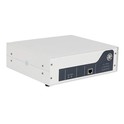
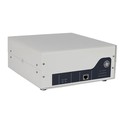
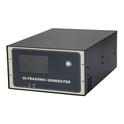
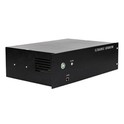
Ultrasonic generator converts a electrical frequency into the high frequencies required in ultrasonic transmission, generally in the range of 20 to 80 kHz. ultrasonic generator uses sweep frequency and auto-follow circuitry. Frequency sweep circuitry drives the transducers between a bandwidth slightly greater and slightly less than the center frequency. For example, a transducer designed to run at 28 kHz will be driven by a generator that sweeps between 27 and 29 kHz. This technology eliminates the standing waves and hot spots in the tank that are characteristic of older, fixed-frequency generators. Auto-follow circuitry is designed to maintain the center frequency when the ultrasonic tank is subjected to varying load conditions. When parts are placed in the tank or when the water level changes, the load on the generator changes. With auto-follow circuitry, the generator matches electrically with the mechanical load, providing optimum output at all times to the ultrasonic tank.
Ultrasonic tanks are generally rectangular and can be manufactured in just about any size. Transducers are usually placed in the bottom or on the sides, or sometimes both when watt density is a concern. Cycle Filtration system consist of a small storage tank, a circulating pump and a filter. A grid is arranged in the middle of the storage tank, which is divided into two part. When the pump starts running, the liquid flows from cleaning tank to storage tank and passes through the grid.
Types of Ultrasonic Filtration System Housings
Cartridge filter housings
The cartridge filter housing, the most common variety used for ultrasonic cleaning tanks, houses a replaceable filter cartridge. Housings can support single cartridges or multiple cartridges depending upon the application.
Bag filter housings
A bag filter housing, the more expensive option, houses a filter bag which can capture greater volumes of contaminants before requiring replacement, making these housings the preferred choice for buffing and polishing compound removal applications, or any other application which involves the removal of considerable amounts of particles from the parts being cleaned or when filtering very large tanks. All filter housings also include pressure gauges which are used to indicate when filter bags or cartridges may require replacement. As the filter media becomes clogged, pressure begins to build inside of the filter housing as the pump tries to force the liquid through the media. When the pressure builds to the maximum pump output pressure, the filter media must be changed.
Ultrasonic Filtration System Technology: Things to Know
Cleaning solvents
Different types of ultrasonic filtration system can be cleaned using ultrasonic cleaners, ranging from various shapes and sizes to various materials. The transducer, frequency, and power must be selected before the cleaning process begins to clean ultrasonic filtration system effectively. Typically, ultrasonic cleaners are used with just water or any other solvent appropriate for the particular type of filter being cleaned. The cleaning solvent should endure temperatures as high as 60 degrees C.
Frequency
While incorporating ultrasonic systems for filter cleaning, choosing the correct frequency becomes important. Depending on the type of soil or dirt to be eliminated during filter cleaning, a frequency between 20 kHz and 800 kHz should be chosen. As frequencies differ, different results are produced. Lower frequencies produce larger bubbles that are aggressive for heavy-duty applications, while higher frequencies produce very tiny bubbles to create a gentle scrubbing action.
Power of the ultrasonic cleaner
In addition, it is important to use the correct power level for an ultrasonic tank. The power of an ultrasonic cleaner is measured in Watts per liter. In general, a high power level is recommended for cleaning heavy contaminants present on ultrasonic filtration system. The power intensity must be controlled precisely and efficiently to prevent parts from eroding due to cavitation. An ultrasonic cleaner uses high-frequency pressure to create cavitation bubbles that agitate liquids. This process aims to remove the contaminants present on the filter. The vibrations from the transducer generate thousands of tiny bubbles that bring the object closer and penetrate any cracks or crevices. Due to tiny cavitation bubbles, impurities and other particles are forced off the surface of the filter. It usually takes ten to fifteen minutes, but it may take longer depending on the type and amount of impurities. It is an effective process of filter cleaning without causing them any damage. For employing an effective ultrasonic cleaning process, make sure to contact reliable ultrasonic cleaning machine manufacturers.
The Art of Ultrasonic Filtration System
Forward flow filter cleaning is a powerful technique that effectively removes contaminants from industrial ultrasonic filtration system by mimicking the normal flow direction of the filtered media. This method leverages the filter's design and takes advantage of the system's operational characteristics to achieve optimal cleaning results. In forward flow cleaning, a cleaning solution is pumped through the filter in the same direction as the normal process flow. This approach allows the cleaning solution to follow the same path as the filtered media, ensuring that contaminants are dislodged and flushed out of the filter in a manner consistent with its design. The cleaning solution is typically introduced at a higher flow rate and pressure than during normal operation to enhance the cleaning action. As the solution moves through the filter, it dislodges contaminants and carries them away from the filter surface, leaving behind a clean and restored filter element.
In-line ultrasonic filtration system with wire mesh elements: The open structure of wire mesh allows the cleaning solution to easily pass through the filter, effectively removing contaminants from the surface and pores of the mesh. Depth ultrasonic filtration system (e.G., sintered powder, fiber media): Forward flow cleaning can effectively remove contaminants that have penetrated deep into the filter structure, as the cleaning solution follows the same tortuous path as the filtered media. Ultrasonic filtration system with non-blinding contaminants: Forward flow cleaning is highly effective at removing contaminants that do not strongly adhere to or block the filter surface, such as loose particulate matter or light oils and greases.
The filter design allows for easy and uniform flow distribution: Ultrasonic filtration system with simple geometries and minimal flow obstructions are well-suited for forward flow cleaning, as the cleaning solution can easily reach all areas of the filter surface. The contaminants are readily soluble or suspended in the cleaning solution: Forward flow cleaning works best when the contaminants can be easily dissolved or dislodged by the cleaning solution and carried away from the filter. The system can accommodate the required flow rate and pressure: To achieve optimal cleaning results, the forward flow cleaning setup must be able to deliver the necessary flow rate and pressure without causing damage to the filter or associated components. It's important to note that forward flow cleaning may not be suitable for all filter types or contaminants. For example, ultrasonic filtration system with tightly compressed elements or contaminants that strongly adhere to the filter surface may require alternative cleaning methods, such as reverse flow or ultrasonic cleaning.
Reverse flow cleaning is a powerful technique that offers a deep clean for industrial ultrasonic filtration system, effectively tackling stubborn contaminants and hard-to-reach areas. By reversing the flow direction of the cleaning solution, this method provides a thorough and efficient way to restore filter performance in challenging situations. While forward flow cleaning mimics the normal flow direction of the filtered media, reverse flow cleaning takes the opposite approach. In this method, the cleaning solution is pumped through the filter in the reverse direction, typically from the outlet to the inlet. This reverse flow action creates a powerful backwashing effect that dislodges contaminants trapped deep within the filter structure. As the cleaning solution moves through the filter in the opposite direction, it breaks up and flushes out contaminants that may be difficult to remove using forward flow methods alone. To maximize the effectiveness of reverse flow filter cleaning, it's important to select the appropriate cleaning solution and flow parameters for the specific filter type and contaminant. When combined with other cleaning methods, such as forward flow or ultrasonic cleaning, reverse flow techniques can form part of a comprehensive filter maintenance strategy that optimizes filtration processes and reduces overall operational costs.
Our factory
Resonance Technology (Ningbo) Co. Ltd, founded in December 2019 with a registered capital of 10 million RMB, is located in the High-tech Zone Ningbo, China. The company has assembled top industry technical talents along with seasoned marketing and management professionals. Leveraging cutting-edge proprietary core technologies, it specializes in researching, developing, and selling high-performance power ultrasonic core components and related complete sets of equipment. The company's products are widely used in various industries such as new materials, fine chemicals, automotive, and new energy. Currently, the company has mastered core technologies in power ultrasonics including control algorithms, power amplification, drive matching, high-power transducer, and vibration system design. Its products have reached international leading levels, with over 40 patent applications and 23 patents granted. We have obtained the GB/T19001-2016/ISO9001:2015 quality management system certification. With around 2000 square meters of research and production facilities, the company possesses a well-equipped testing center capable of conducting more than 120 types of tests in six categories including physical performance, mechanical performance, environmental testing, simulation testing, chemical testing, and precision measurement.

FAQ
As one of the leading ultrasonic filtration system manufacturers and suppliers in China, we warmly welcome you to buy ultrasonic filtration system for sale here from our factory. All customized products are with high quality and competitive price.
filter unblock, ultrasonic filtration system, ultrasonic tank filter