


ResoCav - Industrial Grade Ulrasonicator
What Is ResoCav - Industrial Grade Ulrasonicator
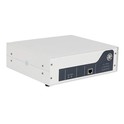
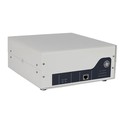
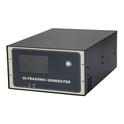
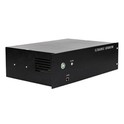
Resocav - industrial grade ulrasonicator are powerful, efficient and reliable. They are built to operate continuously at high load in industrial environments. With up to 16 kilowatts per device, it is the leading ultrasonics supplier for industrial liquid processes. Ultrasonic liquid processing at industrial level requires industrial ultrasonic equipment, because the power requirement rises with the volume or flow to be processed. Ultrasonic laboratory devices are not sufficient for large scale production processes. It is the leading ultrasonics supplier for industrial liquid processing applications, such as, the dispersing, the milling of pigments in paints or inks, the formulation of high performance coatings with nanomaterials, the manufacturing of biodiesel, or the pasteurization of food or beverages.
Advantages of ResoCav - Industrial Grade Ulrasonicator
Strong cleaning power
First of all, ResoCav - industrial grade ulrasonicator has a strong cleaning power, and the vibration makes it possible to clean all kinds of parts without risk of being damaged, parts cleaning is just fast and efficient. This also applies to jewelery sets, glasses, auto parts, etc. But remember, do not clean the ornaments apart generates a fast cleaning speed because involves no work – not to mention the money saving.
Precision
Second, an another benefit of ResoCav - industrial grade ulrasonicator is precision, this is just so important. The ultrasonic cleaner can clean the smallest cracks, breaks and every nook and cranny, but it do not damage the most delicate surface. So, the ultrasonic cleaners are excellent choice for optical instrument cleaning.
Consistency
The third advantage is consistency. The ResoCav - industrial grade ulrasonicator is very high because it gives you an impeccable cleaning every time. This is true for every object – big or small, worked or not.


Why Choose Us
Our Factory
The company has assembled top industry technical talents along with seasoned marketing and management professionals. Leveraging cutting-edge proprietary core technologies, it specializes in researching, developing, and selling high-performance power ultrasonic core components and related complete sets of equipment. With around 2000 square meters of research and production facilities, the company possesses a well-equipped testing center capable of conducting more than 120 types of tests in six categories.
Our Certificate
National high-tech enterprise; GB/T19001-2016/ISO9001:2015 quality management system certification; 23 patents and 3 software copyrights granted.
Production equipment
Three-axis machining center, CNC lathe, high-temperature aging furnace, ultrasonic component analyzer, high-precision oscilloscope, power analyzer, cavitation intensity measurement instrument, spectrum analyzer, laser particle size analyzer, digital bridge, infrared thermal imaging instrument, microscope, laser vibrometer, etc.
Production market
The company's products are widely used in various industries such as new materials, fine chemicals, automotive, and new energy. Since its establishment, it has achieved cumulative sales of over 45 million RMB.
Application of ResoCav - Industrial Grade Ulrasonicator
Solvent degreasing
With solvent degreasing, a cleaning agent is applied directly to the surface of a part by spraying, brushing or wiping. This process removes oil, grease, dirt, loose particles, and any other contaminants that may exist on the surface. Solvent degreasing is used to clean most electronic assemblies, electrical components and metals. Parts are usually dried at an elevated temperature. Almost any size or shape of a part can be cleaned.
Vapor degreasing
With vapor degreasing, solvents are used to dissolve contaminants on a part, and subsequently remove them by dripping off the part. Vapor degreasing can be used with many types of industrial parts, including electronic parts, to remove excess oil, grease, wax and other non-water soluble particles. Vapor degreasing is also a viable option to clean and prepare part surfaces for finishing processes such as painting, welding, soldering and bonding. The process involves a basin of solvent with a heating coil that is used to bring the solvent to a boil. As that solvent evaporates in the process, it rises to the fill line in the chamber. This space contains the vaporized solvent, and that solvent then condenses on the more frigid industrial part. At this point, the solvent, which is now a liquid, dissolves the grease on the industrial part. The liquid solvent beads, and the impurities that are in them, then run off the part.
Acoustic cleaning
Acoustic cleaning is primarily used in material handling systems, storage systems and large equipment pieces. The process itself removes the buildup of material on surfaces by generating powerful sound waves that shake particulates loose from surfaces. Besides the application itself, the particle size range generally governs whether or not acoustic cleaning will be effective. Specifically, the density and moisture content of the particles are the key variables, as well as how those values will change with temperature and time. Generally speaking, particles between 20 micrometres and 5 mm having moisture content below 8.5% are ideal for acoustic cleaning.
Parts washer cleaning
A parts washer is a machine – usually an enclosed cabinet type design – that removes contaminants or debris, such as dirt, grime, carbon, oil, grease, metal chips, fluids, mold release agents, ink, paint and corrosion from industrial parts. They are designed to clean, degrease and dry bulk loads of small or large parts in preparation for assembly, inspection, surface treatment, packaging and distribution. For industrial parts, parts washers can be solvent-based (in which chemical solvents are used to remove contaminants and/or debris), or aqueous-based (in which water and detergent combine with heat and mechanical energy to clean). Aqueous-based parts washers are essentially like large dishwashers. With regard to solvent-based parts washers, non-chemically based detergents are also available to do the job.

The object which needs cleaning is placed in a chamber which contains any suitable cleaning solvent. The solvent could be aqueous or organic. If the solvent is aqueous, usually a cleaning detergent is also added in order to remove nonpolar contaminants such as oil and grease. The temperature of the solvent is kept around 130 °F but cleaning of medical equipment requires a temperature below 113 °F in order to avoid coagulation of proteins. A transducer is in place inside the chamber to produce Ultrasonic waves. The frequency of these compression waves can be maintained using electric signal. The strength of these waves is stronger at their source of origin but as they move further away from the transducer their strength reduces.
The waves thus produced make their way into the solvent creating multiple bubbles or vacuum voids along their way. The number of such voids is in millions. These voids collapse releasing energy. Temperature of 5000 K and pressure of 135 MPa are reached on the collapsing of these bubbles which is just enough to remove contaminants and not harm the object itself. At lower frequencies of around 30 kHz, large bubbles/voids are created which explode against surfaces far more violently as compared to small bubbles which are created at higher frequencies of 80 kHz and higher.
How to Choose A Good Quality ResoCav - Industrial Grade Ulrasonicator
Appearance identification
The appearance of the ResoCav - industrial grade ulrasonicator needs to be carefully observed. If there are cracks, cracks, small holes, etc., it is not safe to use, then its quality is of course not acceptable, so the judgment of the appearance of the ultrasonic cleaning machine is still very important, if even the appearance gets problems, the quality of the ResoCav - industrial grade ulrasonicator is poor. If you encounter the appearance problem, stop using it immediately and contact the ultrasonic cleaning machine manufacturer in time. Therefore, the appearance affects the quality of the ultrasonic cleaning machine. Please be careful when purchasing.
Material identification
The materials used in the ResoCav - industrial grade ulrasonicator need to be carefully identified. It is very important to select high-quality qualified materials. For example, the quality of the ultrasonic bath made of high-quality 304 stainless steel or 316L stainless steel is good, corrosion-resistant, high-temperature, long service life. The quality is not so good when using other materials. For example, it is made of 201 or 202 stainless steel plate material. After a period of time, it will cause rust. Therefore, the material is affected by the quality of the ultrasonic cleaning machine. In terms of the material, the high quality and reasonable material is used to make the ultrasonic wave. The quality of the washing machine is better.
Component Identification
The internal structure of the ResoCav - industrial grade ulrasonicator needs to be carefully checked. Whether there are problems such as missing components and loose components. The quality of the components in question is poor. The imported components are better than the quality of domestic components. For example, integrated modules, domestic technology is not On the imported ultrasonic transducer and ultrasonic generator, the quality will be better, so the components affect the quality of the ultrasonic cleaning machine.
Performance Parameter Identification
Cleaning the object with an ultrasonic cleaner finds that the cleaning object is inferior. Even if it is cleaned for a long time, such an ResoCav - industrial grade ulrasonicator is inferior. Some parameters of the ultrasonic cleaner also affect the quality. If the frequency and frequency cannot be adjusted, The quality of such cleaning equipment is not very good. Excessive power makes the cleaning vibration plate corrode, which reduces the life of the equipment. The ultrasonic cleaning machine with too high power is used soon, and the low power may not reach the cleaning effect. Too low frequency noise is easy to damage the object, so the ultrasonic cleaning machine parameters affect the quality, the appropriate power frequency ultrasonic cleaning machine quality will be good.
Today’ s biodegradable cleaning solution concentrates are a far cry from the environmentally unfriendly formulas used in the past. Check out our tips on selecting an ultrasonic cleaning solution. Cleaning solution performance is extended when steps are taken to remove accumulated contaminants dislodged by the cleaning process. Maintenance procedures are described in user manuals. Larger industrial units may employ skimmers and filters to do the job.
Discussions and examples thus far involve using commercial ResoCav - industrial grade ulrasonicator with biodegradable, water-based cleaning solutions, described just above. When flammable solvents such as IPA, toluene and acetone are required special care must be taken to avoid the real danger of a fire or explosion if spilled solvent or vapors are ignited by sparks from internal electronics or external sources. If your requirements call for the use of flammable solvents, we invite you to check our post on ultrasonic cleaning with flammable solvents. It describes equipment options you can consider and directs you to another resource on the topic that provides examples where explosion-proof ResoCav - industrial grade ulrasonicator are used.
Equipment such as gyroscopes, accelerometers and microphones are usually not subjected to ultra-sound cleaning because the shockwaves produced during the process can irreversibly damage them. Moreover, high voltage can harm their drive circuits and printed circuit boards (PCBs). This problem can be overcome by using ResoCav - industrial grade ulrasonicator which are equipped with a sweep mode which helps in avoiding harmonics that could damage the PCBs. Chromium plated objects are also not recommended to be cleaned through this technique. It is also important not to use any flammable solvent as Ultrasonic waves raise the temperature of the solvent. Human involvement should also be highly regulated as physical contact with the cleaning solution can cause skin irritation and burning.
Our factory
Resonance Technology (Ningbo) Co. Ltd, founded in December 2019 with a registered capital of 10 million RMB, is located in the High-tech Zone Ningbo, China. The company has assembled top industry technical talents along with seasoned marketing and management professionals. Leveraging cutting-edge proprietary core technologies, it specializes in researching, developing, and selling high-performance power ultrasonic core components and related complete sets of equipment. The company's products are widely used in various industries such as new materials, fine chemicals, automotive, and new energy. Currently, the company has mastered core technologies in power ultrasonics including control algorithms, power amplification, drive matching, high-power transducer, and vibration system design. Its products have reached international leading levels, with over 40 patent applications and 23 patents granted. We have obtained the GB/T19001-2016/ISO9001:2015 quality management system certification. With around 2000 square meters of research and production facilities, the company possesses a well-equipped testing center capable of conducting more than 120 types of tests in six categories including physical performance, mechanical performance, environmental testing, simulation testing, chemical testing, and precision measurement.

FAQ
As one of the leading resocav - industrial grade ulrasonicator manufacturers and suppliers in China, we warmly welcome you to buy resocav - industrial grade ulrasonicator for sale here from our factory. All customized products are with high quality and competitive price.
delamination, resocav huc 62c industrial grade ulrasonicator, cell disruption